
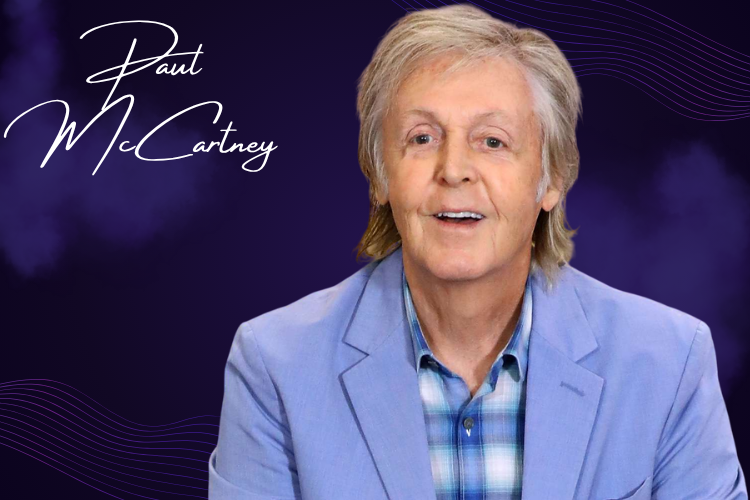
Paul McCartney Early Life and Childhood:
Born on June 18, 1942, in Liverpool, England, Paul McCartney is a British singer, songwriter, composer, bassist, poet, and painter. His work with The Beatles in the 1960s helped popular music evolve from a simple form of entertainment to a highly creative and profitable art form. His collaboration with John Lennon on songs is regarded by many as one of the greatest of the 20th century. In terms of record sales and concert attendance, McCartney remains one of the greatest solo artists of all time.
While his father, James, worked at the Liverpool Cotton Exchange, Paul McCartney’s mother, Mary, was a midwife who often rode her bicycle day and night to help with births. In October 1956, McCartney passed away from breast cancer at the age of just 14. His famous song “Let It Be” (1970) was inspired by her death, which had a great effect on him. His younger brother Michael changed his name to Mike McGear and went on to become popular with the satirical rock group Scaffold.
Like Ringo Starr and George Harrison, two other Beatles members, Paul McCartney grew up in a typical working-class neighborhood in northern England. His extended family frequently visited their Liverpool house at 20 Forthlin Road, which is currently owned by the National Trust. In the evenings, the family would often gather around the piano, and his father led the “Jim Mac Jazz Band.” These experiences later served as inspiration for singalong-style songs like “When I’m 64” (1967).
Meeting John Lennon and The Beatles Formation:
After meeting Lennon on July 6, 1957, at a local event called the Woolton Village Fete, Paul McCartney joined his skiffle group, The Quarrymen. Later, the group went through several name changes before deciding on The Beatles. When Lennon’s mother died in 1958 after being struck by a speeding police car, McCartney, who was still mourning the death of his own mother, could identify with his suffering.
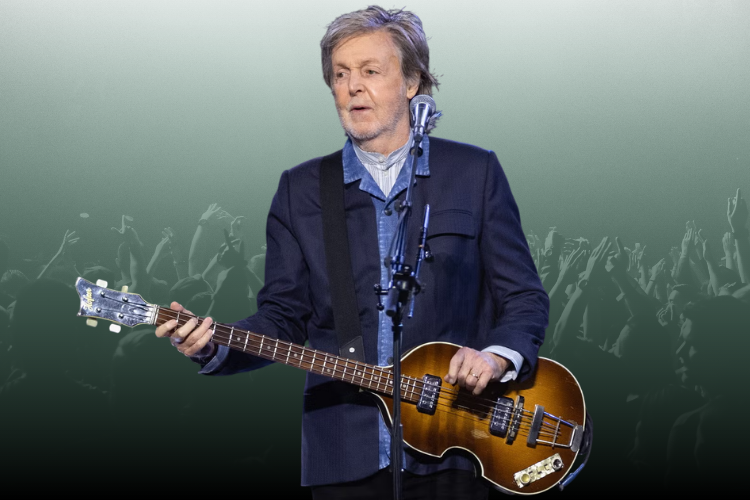
Their shared sadness created a strong emotional bond between them, which formed the foundation of their close friendship. By the time the Beatles signed with EMI-Parlophone in 1962, McCartney and Lennon had already made a name for themselves as the group’s major composers. By the time of their third album, the band had completely stopped recording songs by other musicians.
The Legendary Lennon-McCartney Partnership:
Both Lennon and Paul McCartney placed a high importance on their songwriting partnership, both financially and creatively. In 1969, Lennon brought his song “The Ballad of John and Yoko” to McCartney, despite the fact that their relationship had reportedly gotten so tense as a result of financial problems that they seldom spoke. They worked together on the song’s “middle eight” section. Their music always took precedence over their disputes.
Musical Style and Creative Genius:
Paul McCartney wrote many of The Beatles’ more challenging rock songs, such as “Lady Madonna,” “Back in the U.S.S.R.,” and “Helter Skelter,” despite the fact that he is typically associated with ballads and love songs. all of which were released in 1968. Above all, he was a gifted melodist who occasionally concluded songs with completely fresh melodic parts, as he famously did with “Hey Jude” (1968).
His skill was also demonstrated by his lyrical bass playing, which is frequently praised but sometimes overlooked. As a multi-instrumentalist, McCartney performed drums on several Beatles tracks and nearly every instrument on numerous solo albums. He also played lead guitar in performances.
Solo Career and Formation of Wings:
The Beatles stopped performing live in 1966. After the trio broke up in 1970, Paul McCartney put out two solo albums: McCartney (1970) and Ram (1971). Following that, in 1969, he wed Linda McCartney, with whom he formed the band Wings. Linda’s presence in the band helped McCartney and Linda avoid many of the relationship issues that are common in the music industry.
Paul McCartney desired for Linda to always be with him. Wings became one of the best-selling pop groups of the 1970s and went on international tours. Their success included five consecutive number-one albums, including the critically acclaimed Band on the Run (1973) and Wings at the Speed of Sound (1976), and 27 songs that made it into the U.S. Top 40 charts, more than Elton John had at the time.
Challenges, Comeback, and Recognition:
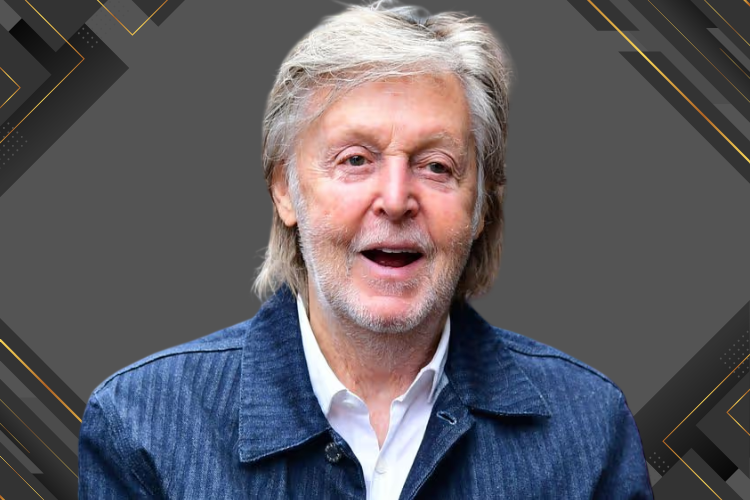
Due to severe security concerns following Lennon’s assassination in 1980, Paul McCartney was unable to tour for almost ten years. Rather, he concentrated on studio recording and worked on the 1984 movie Give My Regards to Broad Street, which he authored and acted in despite its lackluster reception by viewers. However, his 1989 album Flowers in the Dirt, which was released concurrently with his return to live performances, won plaudits from critics, and Flaming Pie (1997) garnered even more appreciation. Queen Elizabeth II knighted McCartney in 1997 in recognition of his contributions to music. Linda passed away from cancer the next year.
Personal Life and Family:
Paul McCartney wed actress and activist Heather Mills in the 2000s, but the two eventually got divorced. He wed Nancy Shevell in 2011. McCartney has five kids. In addition to adopting Linda’s daughter Heather from her prior marriage, he had three children with Linda McCartney: Mary, Stella, and James. Beatrice is the only child he and Heather Mills have.
Later Albums and Continued Success:
Run Devil Run, Paul McCartney’s 1999 album, was primarily composed of early rock and roll hits. Both reviewers and listeners praised the album, which was recorded with Pink Floyd’s David Gilmour. Driving Rain (2001), Chaos and Creation in the Backyard (2005), Memory Almost Full (2007), New (2013), and Egypt Station (2018), which debuted at number one on the Billboard 200 chart, were some of his latter pop albums.
Art, Classical Music, and Writing:
Paul McCartney had a wide range of interests outside of mainstream music. He started painting after meeting painter Willem de Kooning in the late 1970s, and by the late 1980s, he was spending much of his leisure time on it. In May 1999, a retrospective show in Siegen, Germany, featured his artwork for the first time. He experimented with classical music as well.
In 1991, the Royal Liverpool Philharmonic Orchestra gave a performance of his semi-autobiographical classical piece, Liverpool Oratorio, which he co-wrote with American composer Carl Davis at Liverpool’s Anglican Cathedral. Paradoxically, McCartney had previously failed a choirboy audition at this same cathedral.
Later, he handled the recording of a number of other classical pieces, such as Ecce Cor Meum (2006), Working Classical (1999), and Standing Stone (1997). His collection of songs and poems, Blackbird Singing, was released in 2001. Additionally, Paul McCartney wrote the music for the 2011 ballet Ocean’s Kingdom by Peter Martins. In addition, he wrote several children’s books, including Hey Grandude! (2019).
Awards, Achievements, and Legacy:
Throughout his career, Paul McCartney sold over 100 million singles and nearly 60 gold records, making him one of the most successful musicians in popular music history. The Beatles’ 1965 song “Yesterday,” which McCartney wrote wholly and performed with a string quartet, has reportedly been played on American radio and television approximately 6 million times, significantly more than its nearest rival. It is also considered one of the most recorded songs ever, with over 3,000 cover versions.
The U.S. Library of Congress awarded Paul McCartney the Gershwin Prize for Popular Song in 2010, and the same year he was named a Kennedy Center Honors honoree. He received the title of Companion of Honour in 2018.
Activism and Cultural Impact:
Additionally, Paul McCartney is a fervent advocate for animal rights and vegetarianism. He has vigorously advocated for the abolition of seal hunting, the removal of land mines, and debt relief in poor nations. Nowadays, McCartney is seen by many as more than just a rock star; like warm beer and cricket, he is a timeless representation of British culture.