
Steven Spielberg Early Life and Passion for Filmmaking:
American filmmaker and producer Steven Spielberg was born in Cincinnati, Ohio, on December 18, 1946. His varied films, which included historical dramas like Schindler’s List (1993) and Saving Private Ryan (1998) as well as science-fiction classics like Close Encounters of the Third Kind (1977) and E.T.: The Extra-Terrestrial (1982), enjoyed both unprecedented popularity and critical success.
Steven Spielberg became interested in filmmaking as a young boy, and in his teens, his 40-minute war picture Escape to Nowhere (1962) took first place at a film festival. After that, he directed the science-fiction film Firelight (1964), which was followed by Amblin (1968), a successful short about hitchhikers.
when attending California State College, Long Beach (now California State University, from which he would eventually get a B.A. in 2002), Spielberg started working in the studio’s television business when an official at Universal Studios saw the latter movie and offered him a contract. He directed episodes of several television shows, including Owen Marshall: Counselor at Law, Columbo, and Marcus Welby, M.D.
Breakthrough with Duel and Early Success:
Steven Spielberg’s debut television film, Duel, was released in theaters throughout Europe in 1971. It was a stressful, nearly cramped exercise in insanity that was more severe than usual TV fare. Spielberg’s handling of the action scenes was staged and executed with swagger, despite allowing star Dennis Weaver, who played a trucker pursued by a murderous truck driver, to express a one-note impression of sweaty panic throughout the film.
Steven Spielberg was able to produce theatrically released films thanks to the popularity of Duel, starting with The Sugarland Express (1974), a chase film with skillful comedic elements but an unstoppable trend toward tragedy, which was anchored by Goldie Hawn’s performance.
Jaws and the Birth of the Summer Blockbuster:
Steven Spielberg’s following film, Jaws (1975), became one of the highest-grossing movies ever and solidified his reputation as a top director. In it, Roy Scheider plays a resort town’s police chief who fights a man-eating white shark. Robert Shaw, a shark hunter, and Richard Dreyfuss, a marine biologist, accompany him. John Williams’ eerie score won an Oscar, and the highly acclaimed thriller was nominated for an Academy Award for best film.
In addition to establishing many of Steven Spielberg’s work’s touchstones, the film virtually invented the genre of summer blockbuster—a large, action-packed film released to an audience appreciative of being in an air-conditioned theater. The film centers on an ordinary but sympathetic main character who is enlightened through a confrontation with some extraordinary being or force that gradually reveals itself as the narrative unfolds.
Close Encounters and Science-Fiction Success:
Steven Spielberg then wrote and directed the mystical science-fiction story Close Encounters of the Third Kind (1977). In the major role, Dreyfuss gave one of his greatest performances to date as a telephone lineman who becomes fixated on UFOs after seeing an unidentified flying object. Spielberg was nominated for his first Academy Award for best director for the movie. The film’s sole Oscar went to Vilmos Zsigmond’s cinematography, however the visual effects were also commended. Spielberg became the second director in history to earn $100 million in revenue twice in a row.
Indiana Jones and Adventure Filmmaking:
Following the unsuccessful 1941 (1979), which, despite the inclusion of Dan Aykroyd and John Belushi, was viewed as an unfunny comedy, Steven Spielberg directed Raiders of the Lost Ark (1981), a tender, skillful (if a little repetitive) homage to vintage adventure serials. Rich color photography, quick editing, catchy musical soundtracks, and creative special effects were all used in the movie and its sequels, which starred Harrison Ford as attractive archaeologist Indiana Jones.
The result was a generally lighthearted but intensely suspenseful cinematic experience. In addition to being nominated for best picture, Spielberg received his second Academy Award nomination for best director.
The Emotional Impact of E.T.:
Steven Spielberg’s subsequent movie was even more popular. E.T.: The Extra-Terrestrial (1982) was a poignant examination of an extraterrestrial encounter that deftly chose the microcosm of its impact on a single California family over the epic scope of Close Encounters. Dee Wallace played his understanding mother, while Henry Thomas played the youngster who finds and becomes friends with the stranded extraterrestrial.
Drew Barrymore played one of her first parts in the movie as well. Steven Spielberg’s grasp of human (and alien) emotion was what made the film a success, even though the special effects—in this case, the superbly articulated E.T.—were a major part of the film’s appeal, as was the case with most Spielberg films up until that time. Spielberg, the movie, Melissa Mathison’s script, Allen Daviau’s photography, and Williams’s score were all nominated for Academy Awards; only the latter took home the trophy.
The Color Purple and Dramatic Storytelling:
Steven Spielberg adapted Alice Walker’s Pulitzer Prize-winning book The Color Purple (1985) after shooting Indiana Jones and the Temple of Doom (1984). The film examines the nearly intolerably difficult but ultimately rewarding life of an African American lady. Color received harsh criticism for romanticizing life in the Deep South, promoting stereotypes about Black men, and downplaying the novel’s lesbian theme.
The cast, which included Whoopi Goldberg, Margaret Avery, and Oprah Winfrey, all of whom were nominated for Academy Awards, as well as the script (written by Menno Meyjes) and score (written by co-producer Quincy Jones), were all well received by the audience. Spielberg’s failure to obtain an Oscar nomination despite the film’s best picture nomination caused a minor controversy at the time. More significantly, though, Spielberg had produced one of the few commercially successful films about African Americans’ experiences, opening the door for similar projects to be approved.
Empire of the Sun and Late 1980s Films:
Steven Spielberg decided to base his next movie on another highly regarded book. The World War II prison-camp setting of J.G. Ballard’s autobiographical novel of the same name was meticulously recreated in the Tom Stoppard-written film Empire of the Sun (1987). However, Empire of the Sun nearly let the story of its teenage protagonist (Christian Bale) drown under a tsunami of pyrotechnics, but The Color Purple was able to communicate emotional reality.
It didn’t do well at the box office. With Indiana Jones and the Last Crusade (1989) and Always (1989), an adaption of the 1943 movie A Guy Named Joe, Spielberg wrapped up the 1980s. Despite the success of Indiana Jones, Always was unsuccessful in attracting viewers.
Spielberg’s Influence on Hollywood:
Many critics felt that The Color Purple and Empire of the Sun lacked emotional depth or understanding, and Steven Spielberg’s inclination toward broad storytelling may have hindered his attempts at more intricate filmmaking. However, Spielberg’s films’ relentless commercialism and positivism grew to dominate Hollywood in the latter half of the 20th century. When the Academy of Motion Picture Arts and Sciences presented him with the Irving G. Thalberg Award for excellence in production in 1986, it acknowledged his widespread influence.
Jurassic Park and Schindler’s List:
Hook (1991), a dramatization of J.M. Barrie’s Peter Pan, was Steven Spielberg’s first motion picture of the 1990s. Despite having Julia Roberts and Robin Williams among its cast, the film failed both critically and financially. But Steven Spielberg made a remarkable comeback in 1993 with two wildly successful films. The first, Jurassic Park, was an adaptation of Michael Crichton’s best-selling book from 1990 about dinosaurs that were recreated and running wild on a far-off island. There are enough powerful shocks to show that Spielberg was still a master of Alfred Hitchcock-caliber suspense, even though its perilous scenes are less skillfully interwoven with character-focused idle activities than in Jaws.
Schindler’s List, Steven Spielberg’s second 1993 film, is based on the true story of a group of Polish Jews who, with the help of German entrepreneur Oskar Schindler, managed to escape Nazi extermination camps during World War II. Many of Spielberg’s critics were put off by the drama, which included outstanding performances by Ralph Fiennes, Ben Kingsley, and Liam Neeson. Spielberg received his first Academy Award for best director for the film, which was shot in black and white with unwavering detail. The movie also won six additional Oscars, including best picture.
DreamWorks and Expanding Success:
Steven Spielberg founded a new studio called DreamWorks in 1994 alongside multimedia tycoons Jeffrey Katzenberg and David Geffen. The studio was especially successful in producing animated movies like Antz (1998), the Shrek series (2001, 2004, 2007, and 2010), and Puss in Boots (2011). For $1.6 billion, the partners sold the business to Viacom in 2006.
The Lost World and Amistad:
Steven Spielberg’s 1997 film The Lost World: Jurassic Park featured many captivating moments, but it fell short of Jurassic Park’s grandeur. Based on Crichton’s 1995 best-selling novel, which he allegedly wrote at Spielberg’s request, the movie replicates the Jurassic Park formula with a mostly new cast, including Julianne Moore, Vince Vaughn, Pete Postlethwaite, and Arliss Howard, as well as returning actor Jeff Goldblum, who once again plays a scientist who understands that this exploitation of nature for financial gain is both crude and immoral. The dinosaur special effects are on par with the previous movie, and there are lots of thrilling moments.
Steven Spielberg was in social historian mode, according to Amistad (1997). The movie focuses on the 1839 slave uprising on the Spanish slave ship Amistad and the trial that followed in the United States, when the slaves were accused with high seas rebellion but the court determined that they had been abducted. Anthony Hopkins was nominated for an Academy Award for his spectacular portrayal of former US President John Quincy Adams, who is crucial in defending slaves before the Supreme Court, while Matthew McConaughey was successful as a defense attorney. Djimon Hounsou made an unforgettable performance as Cinque, the African leader. Despite receiving positive reviews from critics, the movie’s box office performance was only mediocre.
Saving Private Ryan and War Dramas:
Steven Spielberg returned to the Second World War in 1998 with Saving Private Ryan. The drama, which received both praise and criticism for showcasing some of the most realistic battle sequences staged in a Hollywood war film, is regarded as one of the high points of his career. The 27-minute introduction, which shows the American invasion of Omaha Beach on D-Day, is especially noteworthy. Following that terrifying scene, the movie shifts to a more traditional plot as a group of soldiers look for Ryan, a paratrooper, to rescue him from battle before he is killed, as his three brothers were just.
Along with Tom Sizemore, Edward Burns, Barry Pepper, Adam Steven Spielberg, Giovanni Ribisi, Ted Danson, Vin Diesel, and Matt Damon in the titular role, Tom Hanks played Captain John Miller, who is in charge of the expedition. Spielberg earned his second Academy Award for best director, and Saving Private Ryan received eleven nominations, including best picture. The movie had the highest box office receipts of any release in the US that year.
A.I. Artificial Intelligence and Minority Report:
Stanley Kubrick came up with the idea for A.I. Artificial Intelligence (2001), based on a short tale by British author Brian Aldiss, in the 1970s. Twenty years later, while the film was still in the planning phases, Kubrick started to believe Steven Spielberg would be a better filmmaker. Spielberg was asked to lead the project by the Kubrick estate after Kubrick passed away in 1999.
He cast Jude Law as Gigolo Joe, a robotic male prostitute, and Haley Joel Osment as David, a young humanoid robot intended to convey love. Their destinies quickly become entwined, and they will continue to do so for thousands of years to come. Steven Spielberg’s aptitude for science fiction contributed to the film’s challenging and frequently poignant tone, although Kubrick and Spielberg’s conflicting sensibilities may be to blame.
Steven Spielberg used another science-fiction short story, this one by Philip K. Dick, for the futuristic Minority Report (2002). However, his goals were well outside Dick’s yarn’s purview. Tom Cruise portrayed John Anderton, the head of the Washington, D.C. police department’s Pre-Crime branch, which is dependent on three mutant creatures known as Pre-Cogs that are able to anticipate which citizens are going to commit violent crimes.
Catch Me If You Can and The Terminal:
In 2002, the very different Catch Me If You Can was also released, and it was much more well-liked. The book of con artist Frank Abagnale, Jr., who, as a teenager in the 1960s, defrauded individuals and organizations of millions of dollars by pretending to be a doctor, a lawyer, and even a Pan Am airplane pilot, served as the basis for the film. In addition, he was an expert forger, a talent that ultimately led the FBI to pursue him. As the relentless federal agent Carl Hanratty, who chases Abagnale for years before becoming close to his target, Hanks was incredibly entertaining.
However, Leonardo DiCaprio owns the movie, and he provided one of his best performances as the charismatic and endearing criminal Abagnale. Amy Adams portrayed a doctor’s assistant that Frank falls in love with, while Christopher Walken as Frank’s disgraced father. The movie, which was a commercial and critical success, was turned into a popular Broadway musical in 2011.
Steven Spielberg directed the lighthearted comedy The Terminal in 2004. Hanks starred once more, this time as Viktor Navorski, a traveler from a made-up central European nation who arrives at a New York airport only to discover that his passport has been revoked due to a civil war in his native country, preventing him from entering the United States. He’s stuck at the airport because he can’t go back to his war-torn country. While Catherine Zeta-Jones played a flight attendant with greater empathy, Stanley Tucci played a cruel customs officer who does everything in his power to make Navorski leave.
Despite being based on a real-life incident that left a man trapped in the Charles de Gaulle Airport in France for 17 years, the movie plays like a fable up to the happy ending. The Terminal got mixed reviews and was likely Spielberg’s least profitable movie of the decade financially.
War of the Worlds and Munich:
Steven Spielberg returned to the world of science fiction blockbusters with War of the Worlds (2005). This adaptation of the H.G. Wells classic, which had already been made into a highly acclaimed movie in 1953, benefited from Cruise’s star power.
The way the movie handled the plot seldom excited viewers, who might have been ready for more action than to see Cruise sheltering in a farmhouse with a crazy survivor (Tim Robbins), despite a number of effective set pieces, such as the opening scene, in which giant alien tripods emerge from beneath the streets of modern-day Newark, New Jersey, to wreak havoc on the populace after being buried underground for thousands of years (a touch unique to Spielberg’s version). Despite some negative reviews, the movie was a box office hit.
Munich (2005) was a much more somber and contentious work. In the film, Eric Bana played Avner, an operative of Israel’s Mossad who is requested by Prime Minister Golda Meir to lead a group of assassins tasked with finding and executing the Palestinian terrorists who killed eleven Israelis during the 1972 Munich Olympics. In order to guarantee complete deniability, Avner leaves the Mossad and puts together a group of professionals with expertise in explosives, document forgery, and other areas who begin looking for their targets.
The multinational cast includes, among others, Daniel Craig, Ciarán Hinds, Hanns Zischler, and Geoffrey Rush (as Avner’s handler). The film’s painstaking attention to detail and verisimilitude, which demand respect but might tire viewers, are both its strengths and weaknesses. Despite the contentious discussions surrounding its release—too pro-Israel for some, too anti-Israel for others—many critics ranked Munich one of the greatest movies of the year. Steven Spielberg was nominated for another Academy Award for best director, and the movie was nominated for best picture.
Indiana Jones Returns and Tintin Adventure:
Spielberg’s next movie, Indiana Jones and the Kingdom of the Crystal Skull (2008), was set in 1957 and was produced 19 years after Indiana Jones and the Last Crusade. Harrison Ford, now a tough 64-year-old, reprised his iconic role as professor and explorer extraordinaire Indiana Jones. This time, he encounters Soviet agents who want him to find an old crystal skull that is said to have psychic abilities.
Shia LaBeouf portrayed Mutt, a rugged motorcyclist who, through Karen Allen’s character Marion from the first Indiana movie, turns out to be Indy’s son. In addition to Cate Blanchett as a lethal Russian agent and Ray Winstone as a British agent who covertly works for the Soviets and betrays Indiana, Allen makes a successful comeback to the series after a 37-year absence. The picture, which was purposefully produced in a throwback style, was well-received by viewers and ended up being the third-biggest box office hit of the year.
The long-running comic strip by French cartoonist Hergé was adapted into The Adventures of Tintin (2011). Spielberg had been captivated by the character Tintin for a long time. He had obtained the film rights from Hergé’s widow in the early 1980s, but they expired when the movie failed. However, Spielberg was able to launch the project about 20 years later with the help of filmmaker Peter Jackson, who served as producer.
Instead of using live-action or pure animation, he and Jackson chose to adopt a motion-capture approach, similar to what Jackson had done for the character of Gollum in his Lord of the Rings trilogy. In the United States, the movie’s box office and critical reception was merely mediocre; however, it performed better in Europe, where Tintin was far more well-known.
War Horse and Lincoln:
Spielberg directed War Horse, another adaptation, in 2011. The drama was based on a well-known Broadway production that was adapted from Michael Morpurgo’s children’s book from 1982. The story begins just before World War I begins when the father of the horse’s young owner, Albert, sells Joey to a cavalry commander in order to purchase food. Albert is promised by the officer that he will return Joey at the end of the war, but he is shortly killed, and Joey ends up in the hands of several different owners.
After much effort, Albert, who was too young to enlist at the start of the war, finds the now-injured Joey and prevents him from being put down. Given Spielberg’s renown and Broadway history, the movie had great anticipation and was nominated for an Academy Award for best picture. However, moviegoers’ reactions to it were muted.
Spielberg’s film Lincoln, written by Tony Kushner, was released in 2012. The film, which is partially based on Doris Kearns Goodwin’s 2006 study Team of Rivals: The Political Genius of Abraham Lincoln, tells the story of the contentious politics that preceded the Thirteenth Amendment’s ratification, which officially outlawed slavery, in the last months of the Civil War.
Spielberg’s picture, which stars Daniel Day-Lewis as Abraham Lincoln, depicts the president’s complicated personality, which combines cynical despair with good humor. The movie was successful at the box office despite criticism from some critics that it underplayed the significance of abolitionists outside of Congress and made several historical shortcuts. Additionally, it was nominated for twelve Oscars, including best picture and director.
Bridge of Spies, The BFG, and The Post:
The Coen brothers and Matt Charman wrote the Cold War drama Bridge of Spies (2015), which Spielberg subsequently directed. The movie, which depicted historical events, starred Tom Hanks as civilian attorney James B. Donovan, who was asked to defend Soviet spy Vilyam Genrikhovich Fisher in 1957 under the code name Rudolf Abel (Mark Rylance). Two years after the Soviet Union arrested American pilot Francis Gary Powers in 1960, Donovan was enlisted by the CIA to broker a prisoner exchange in East Berlin. The film’s tight plot and well-drawn characters won praise.
A popular children’s book by Roald Dahl is adapted in the 2016 film The BFG. Rylance played the title role of the “big friendly giant” in the movie. The BFG (called Runt) eats vegetables and spends his days creating dreams and his evenings delivering them to sleeping humans, while his fellow giants prefer to devour human children and cause chaos. One night, he brings Sophie, a young orphan, back to Giant Country, where they encounter a group of enormous adversaries.
Ready Player One and West Side Story:
Spielberg made a comeback to historical events in 2017 with The Post, a critically acclaimed drama about the release of the Pentagon Papers, a top-secret Department of Defense investigation regarding the Vietnam War. In 1971, the documents were acquired by both The New York Times and The Washington Post; the movie centers on the latter’s attempts to publish the content. Meryl Streep played Katharine Graham, the owner of The Washington Post, while Hanks played Ben Bradlee, the newspaper’s executive editor.
With Ready Player One (2018), Spielberg returned to science fiction storytelling after a 13-year hiatus. The film is set in the apocalyptic year 2045, when people from a failing Earth seek safety in the fascinating virtual world of OASIS. It centers on Wade Watts, a teenager who adores the 1980s, as his avatar competes with other users to discover the prize that the simulation’s creator has concealed.
Spielberg’s first attempt at a musical was West Side Story (2021). Despite being based on a popular stage play and movie, his rendition was praised for its fresh interpretation of the tale of star-crossed lovers in 1957 New York City. The screenplay was written by Tony Kushner, and new dances were created by choreographer Justin Peck. Spielberg was nominated for eight Oscars, including best director, for West Side Story.
The Fabelmans and Spielberg’s Legacy:
Inspired by his own family, Spielberg published the semi-autobiographical novel The Fabelmans in 2022. Sammy, the protagonist of the dramedy, is an ambitious filmmaker who is supported by his free-spirited mother (Michelle Williams) but not by his talented computer engineer father (Paul Dano). Sammy’s parents’ marriage gradually deteriorates as he immerses himself in films. Spielberg and Kushner co-wrote the critically acclaimed film The Fabelmans. Spielberg received his tenth Oscar nomination for best director, and it was nominated for best picture. He also received his first nomination for best original script.
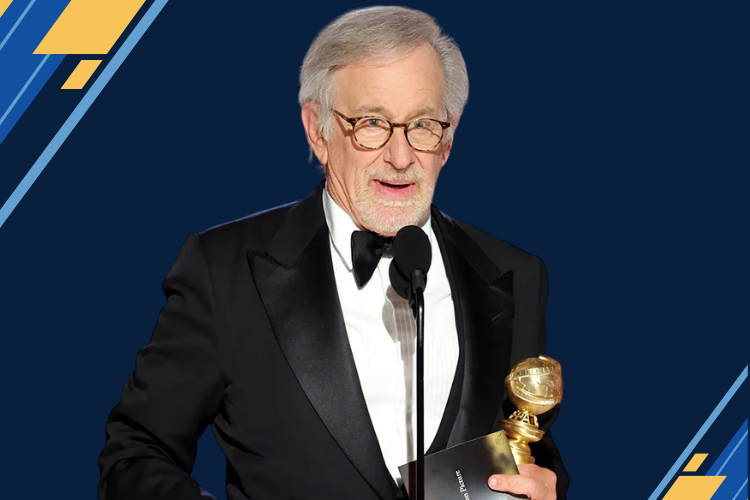
Spielberg received more awards in addition to his Academy Awards. He received the Presidential Medal of Freedom in 2015. Spielberg (2017) is an HBO TV documentary on his life and career.