

About David Ellison:
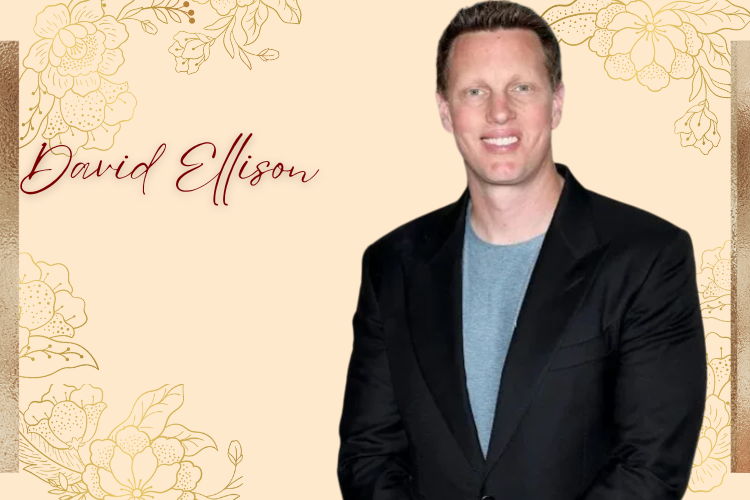
David Ellison informed Warner’s shareholders that his coalition, which includes Middle Eastern sovereign wealth funds, is pledging an additional $18 billion in cash, calling Netflix’s $82.7 billion deal worth a “lousy proposal.” “David Ellison”
It’s now a bidding battle. David Ellison claims that his Paramount group is being aggressive and has made a $108.4 billion hostile offer in conjunction with Red Bird Capital and a number of wealth groups. The strategy include seizing complete control of Warner Bros. Discovery, making direct appeals to its shareholders, and even enlisting Hollywood’s backing by claiming that his family’s ownership would benefit the entertainment sector.
David Ellison, the son of $277 billion Oracle founder Larry Ellison, attended President Trump’s Kennedy Center Honors on December 7 in Washington, D.C. He called Netflix’s $82.7 billion offer a “bad deal” and said Warner’s choice to split the firm was a grave error.
Warner Bros., HBO, and HBO Max would be transferred to the streaming behemoth under the agreement reached with Netflix co-chiefs Ted Sarandos and Greg Peters, while WBD’s faltering cable networks division (TNT, CNN, HGTV, The Food Network, and Discovery) would be split off as a separately traded business.

According to David Ellison’s firm, Paramount’s bid gives WBD stockholders $18 billion more cash than Netflix’s. They went on to say that the WBD board’s desire for the Netflix deal is predicated on an inaccurate assessment of the global networks division, which is challenged by the entity’s high level of financial debt and unsupported by business fundamentals.
The Paramount team frequently voiced their dissatisfaction during an investor call on Monday, claiming that they were excluded from the talks during the last few days of talks with Zaslav’s Warner Bros. division earlier in December. “Not once during the entire process did we receive even a single markup of documents,” protested COO Andy Gordon. Paramount is making a cash tender offer of $30 per share.
On the other hand, Netflix’s $27.75 offer would provide stockholders a part in the linear TV spin-out in addition to a combination of cash and shares. The comparison is exacerbated by the relative value of the linear TV segment; Netflix is purchasing solely WBD’s streaming and studio operations, while Paramount is proposing to purchase the complete corporation.
According to a document, Paramount’s tender offer is supported by $24 billion in debt financing from Jared Kushner’s Affinity Partners and the sovereign wealth funds of Saudi Arabia, Qatar, and Abu Dhabi. A copy of the December 4 offer containing that financing is included in the tender.
Abu Dhabi, Saudi Arabia, Qatar, and Kushner would cede control of the company’s governance if the purchase goes through. (The Chinese entertainment behemoth Tencent was included in a previous Paramount deal for Warner, but the consortium withdrew Tencent due to WBD board concerns. Additionally, Affinity and the sovereign wealth funds agreed to give up any board representation and other governance rights associated with their non-voting equity interests.
Paramount must persuade stockholders to sell their stock to them rather than accept the Netflix transaction because this is a tender offer. This will probably result in Paramount, Warner Bros., and Netflix engaging in a protracted, highly visible struggle to win over investors.
“David Ellison said that their fully cash-backed offer, which he feels is the best option for acquiring the entire company, should be given to WBD investors.” We created the same offer to Warner Bros. in private as we did in public. Discovery board—provides better value and a more certain and faster path to closing,” he continued. We think the WBD board is pursuing a subpar proposal that exposes shareholders to a cash-and-stock mix, the unclear future of the global networks linear cable business, and a challenging regulatory approval procedure.
In order to further their argument, Paramount created the website Stronger Hollywood, which details their proposal and challenges Netflix’s agreement. David Ellison contends that the industry would benefit from his company’s takeover. The David Ellison team estimates that the merger of Warner Bros. Discovery and Paramount would result in cost-saving synergies of roughly $6 billion, mostly through the elimination of redundant operations in back office, finance, technology, and infrastructure—all while keeping the creative teams.
The $8 billion merger between David Ellison’s Sky dance Media and the company that owns Paramount Pictures, CBS, MTV, and Paramount+ is just a few months away. David Ellison is the producer of the Mission: Impossible movies and the popular Top Gun: Maverick.

He went on to say that their proposal would help build a stronger, more resilient Hollywood.It works best for the film theater sector, consumers, and the creative community. We think more competition and more material will help them. There will be more movies in theaters, more theatrical releases, and increased entertainment spending as a result of our proposed deal.
A public battle to persuade Wall Street, government regulators, Hollywood interests, and shareholders who is the greatest fit for Warner Bros. is probably in store. Warner CEO David Zaslav, who stood to benefit millions if the sale went through, stated that the decision was based on “the reality of an industry undergoing a generational shift — in how stories are financed, produced, distributed, and discovered” after the agreement was signed on December 5.
In an early call with analysts that same day, Sarandos and Peters both stressed how much the industry would gain from the deal. “This deal is pro-consumer, pro-innovation, pro-worker, pro-creator, pro-growth,” Sarandos stated, and Peters added that it will “create more jobs across the entire entertainment industry.” Under the code name Project Noble, Netflix obtained $59 billion from a consortium of banks to finance the transaction.
Additionally, Netflix may be the target of strong accusations (Paramount already has a lengthy list ready), alleging that Netflix is eliminating a significant studio buyer, that it may eventually eliminate theatrical windows, and that it may develop into a monopoly with overwhelming market strength in subscription streaming.
“We will continue to be in theaters through Warner Bros.” was Sarandos’ attempt to allay such worries, but it did not rule out the idea that WB’s financial model may change in the future. In a similar vein, Peters commended the HBO brand but did not explicitly state that HBO Max would continue to be a stand-alone service.
In an attempt to secure White House approval for the agreement, Sarandos met with Trump during the lobbying process, which would have led to a critical post on Truth Social. Trump said on Monday that he thought David Ellison’s Paramount was “no better than old ownership,” citing CBS’s 60 Minutes. Only a few hours had passed since Trump presented the Kennedy Center Honors, which CBS will air on December 23.
Although they may not necessarily agree with Paramount’s offer, Hollywood labor organizations have also voiced their opposition to the Netflix transaction. The head of the Teamsters’ Motion Picture Division also called for the contract to be halted, and the Writers Guild of America vehemently opposed it, saying “it should be blocked.” Cinema United, a group representing theatre owners, called it “a threat unlike anything before,” and UNIC, its European counterpart, said the deal was “deeply flawed in every respect.”
SAG-AFTRA, which has an agreement with Netflix to broadcast the Actor Awards, postponed making a decision, stating that the acquisition “should result in more creation and more production, not less.” Additionally, Christopher Nolan, the head of the Directors Guild, voiced “serious concerns” regarding the agreement. If it passes regulatory approval, Netflix anticipates closing the transaction in 12 to 18 months. According to David Ellison’s Paramount, the acquisition may be finalized in a year.