
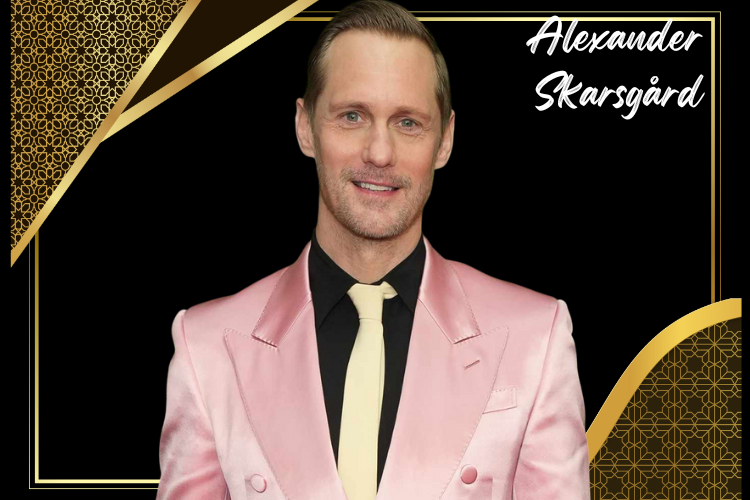
How Alexander Skarsgård Started His Acting Career:
Alexander Skarsgård tries to force women to have sex with him while nude in hotel suites, which is shamefully strange. At least that's how it seems based on the character he played in Donald Glover's comedy Atlanta last year. “I’m not saying I strut around wearing a leopard-print thong in front of complete strangers,” he says. But I'm not saying I don't. This type of stuff works best when there is some truth behind it.
Alexander Skarsgård 46-year-old actor is naturally witty and clever. Some of the cruel, nasty characters that have come to define him over the years include the violent abusive husband in HBO’s Big Little Lies, the violent abusive police officer in War on Everyone, the racist in Passing, the rapist in the Straw Dogs remake, and the miserable, moustached creep in The Diary of a Teenage Girl who sleeps with his partner’s underage daughter. It’s shocking because of his inherent self-deprecation. On the other hand, Eric, the vampire he played in all seven seasons of True Blood, was almost flawless.
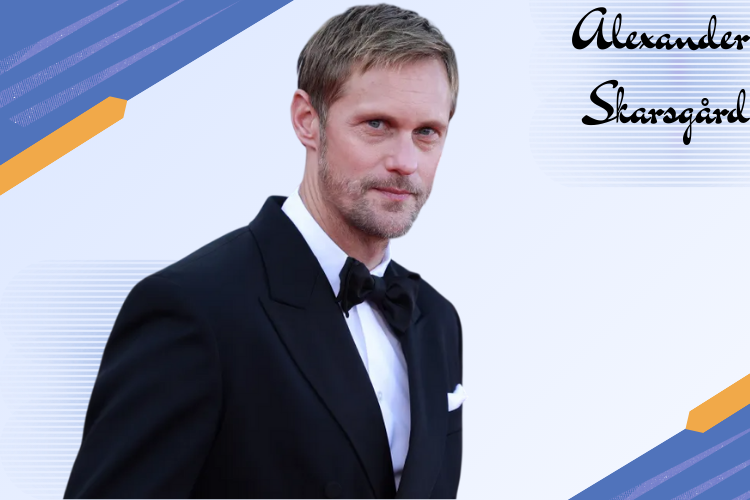
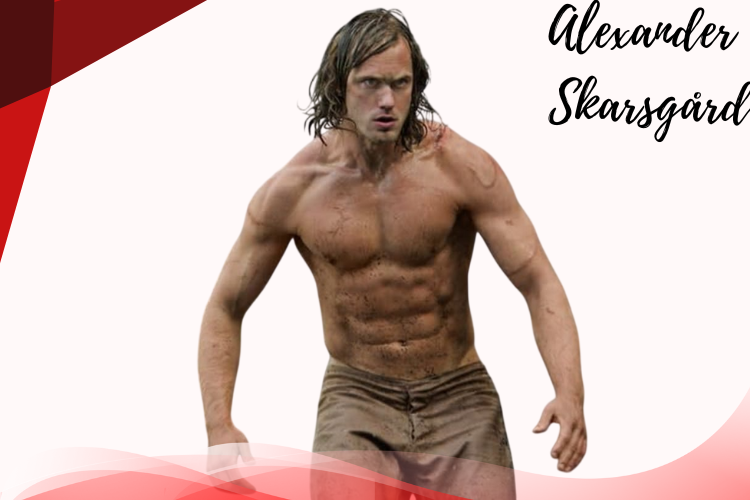
One could even argue that Alexander Skarsgård appears confused or blurry in passages that don’t offer any melancholy to complement his innate brightness. He was as savage as a mud-soaked proto-Hamlet in Robert Eggers’ wild Viking epic The Northman, but as the yodeling, vine-swinging hero in The Legend of Tarzan, there wasn’t much depth to the beauty. On the other hand, he plays a role full of conceit, immorality, and rotten luxury in the recently released comic horror film Infinity Pool, which was directed by Brandon Cronenberg, the son of David Cronenberg.
Alexander Skarsgård plays James, a novelist who struggles to create his second book while living off the wealth of his wife, Em (Cleopatra Coleman), six years after his debut. In pursuit of inspiration, James and Em travel to a lavish resort in an undisclosed country. What begins as a scathing satire against the vices of the one percent becomes something more profound as the two fall in love with the hedonistic Gabi (Mia Goth) and her lover, Alban (Jalil Lespert). James is easily seduced into their web with just a few compliments from Gabi and a graphically detailed sex act. With a smile, the performer says, “My job is very difficult.” “Alexander Skarsgård”
Both Alexander Skarsgård and Cronenberg are the offspring of famous and successful people. ( Alexander Skarsgård’s father is Stellan Skarsgård; he belongs to Lars von Trier’s cinematic universe.) The director and the performer both have a calm manner. “Canadians and Swedes have a politeness about them,” says Alexander Skarsgård. But it’s all a façade. On the inside, we are animals. We just do a fantastic job of hiding it. He makes a motion at me. “The British, too. It contains everything. When you turn on the faucet, it just comes out. That is what this film achieves. “Alexander Skarsgård”
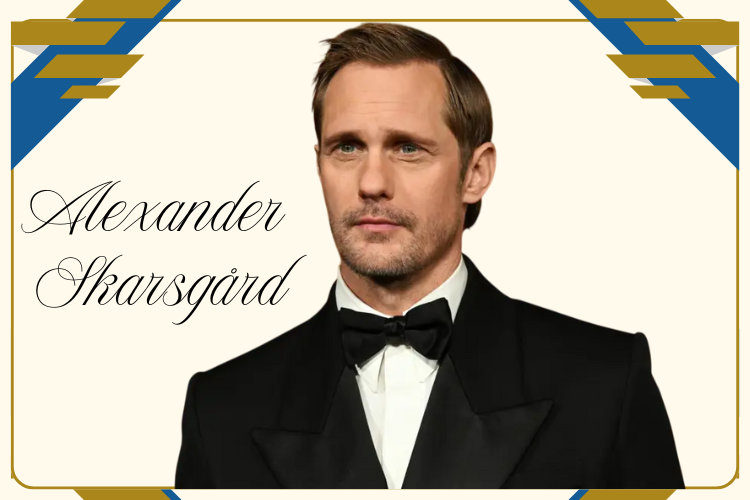
Throughout the film’s fall into scary territory, Alexander Skarsgård upholds the idea that his character is a show pony who thinks he is a stallion. James is too good to resist. His wife is the one who bought all of these expensive clothes. They look like the perfect holiday pair, right out of a travel guide. He is working to earn the respect he desires as a writer. But he’s not Charles Bukowski. He is neither tormented nor troubled. The bad features of his personality are unrelated to him. Everything changes when James accidentally kills a local farmer and is given the death penalty.
The authorities explain that there is a loophole: for an enormous fee, a duplicate can be created to face the punishment instead. But this stand-in isn’t a soulless body. It carries every one of James’s memories, emotions, and lived experiences. In every way that truly matters, it is him. Despite the film’s extreme depictions of sex and violence, nothing is more unsettling than the moment James comes face to face with his own replica, which jolts awake in terror inside a vat of thick, blood-red sludge.
Laughing uneasily, he recalls, “The studio actually gave me a prosthetic version of the clone’s face, still coated in that sticky stuff.” He shakes his head. “It’s horrifying. How do you even begin to handle something like that? Hang it up? Put it in the fridge?” He finally decided to enjoy himself with it.When guests show up, I secretly tuck it away in unexpected spots around my home.
Would he personally take the cloning escape route? He doesn’t hesitate. “Absolutely. I don’t blame James for taking the money out of the ATM. But it opens up much bigger questions. If the clone has every memory, how could it ever know it’s the copy? Maybe the real James is the one being executed. I was captivated by that concept, and I adore that the movie never explains it. Perhaps James has already visited the island, which would further complicate matters. Perhaps he has already completed all of this.
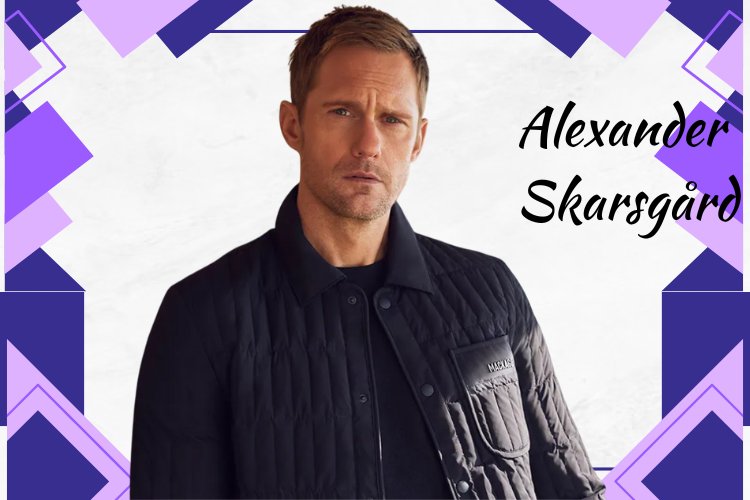
An actor who formerly portrayed an odd version of himself in Atlanta and acknowledges that he still suffers from impostor syndrome is obviously affected by questions of identity, fragility, and duplication. If you had been on the set of Generation Kill, the 2008 HBO miniseries about the Iraq War that was written by the authors of The Wire and shot in Namibia, Mozambique, and South Africa, you may have seen him quietly making figures on paper while sitting off to the side between takes.
According to him, it was his first major job, and he fully expected to be fired. When they discovered I wasn’t good enough, I actually calculated how much it would cost them to replace me. Every ringing phone caused him anxiety, even after months of filming. “Whenever my agent’s phone number popped up, I assumed it meant I was about to be told to clear out because my days were numbered. It wasn’t until later that I realized replacing me would have been far too expensive. had already filmed several major fight scenes.
Although he recalls being fired from a Stockholm bakery job at the age of sixteen, failure was not a recurring motif in his life. He half-argues, “We spent six hours a day in a basement dipping tiny cookies into chocolate—that was literally all we did.” “It’s difficult to resist flicking a few spots onto your friend’s white clothes once your fingers are covered in chocolate.” A small food fight developed from a simple bit of mischief. He gives a sheepish smile. There is no doubt that the chocolate did not melt in his lips.
He eventually gave up acting as a child because the attention was too much for him. Any time I thought someone had recognized me, it made me deeply uncomfortable. I took everything that people said about me at face value. Most people don’t even know who they are at thirteen. It wasn’t healthy for me to go through the difficult transition from boy to man in public.
I didn’t work for eight years because of this. What has he learned from that younger version of himself? “Happy,” he says. That makes me seem resentful now, but there was an innocent, honest, and pure quality to it. It’s important to keep in mind that this can still be a huge, absurd game.
His enduring love for comedy backs that up. He was memorably funny in the opening episode of On Becoming a God in Central Florida, playing a clueless man who gets sucked into a pyramid scheme—only to be eaten by a crocodile. His on-screen wife was Kirsten Dunst.
For more proof that von Trier’s marriages never succeed, see his apocalyptic Melancholia. In the most recent season of Documentary Now!, he portrays a Werner Herzog-like director who oversees both the production of an epic movie in the Urals and a comedic pilot on a US network called Bachelor Nanny. “I’ve met Herzog a few times over the years, but I don’t know if he’s seen it yet,” he says nervously.” What would he think, I wonder?
Comedy was actually what drew Alexander Skarsgård back to acting after all those years. His father’s agency suggested that he try out for a role while he was on vacation in Los Angeles in the early 2000s. Six weeks later, he was driving around New York in the back of a Jeep with Ben Stiller, joyously pouting as the foolish Swedish model Meekus in Zoolander. Because the work came so naturally to him, he was saddened to keep getting rejected from other Hollywood auditions. It took him a another six years to start Generation Kill’s career in the United States after he returned to Sweden to continue performing.
These days, he feels both immensely grounded and everywhere at once. He and Florence Pugh will portray Alaskan documentary filmmakers in his debut film, The Pack, which he is preparing to direct. He also makes a comeback this month for Succession’s fourth and final season, when his character, tech bro Lukas Matsson, another kind of bad guy, is reportedly given even more attention.
He says that “many of the projects I’ve chosen are about someone trying to function in modern society while also grappling with the primal question of who they really are inside—and what happens when that feeling ignites and can no longer be suppressed.” Playing those characters is really fulfilling. Maybe that’s because I’m usually so composed. In these darker, more complicated parts, I get to let out that primal scream that I don’t frequently let out in my everyday life.
James is overjoyed by even the smallest compliment in Infinity Pool. Although Alexander Skarsgård claims he doesn’t read what is written about him, he admits that he is equally gratified by praise. He says, “I really don’t read reviews.” Still, it’s great when someone comes up to you, says something, or asks to take a picture because they like what you’ve done. That’s preferable to the alternative, which is to give all you’ve got, roll around in the mud for seven months, and then—silence. I take pleasure in receiving compliments on my work. I’m an arrogant person!