
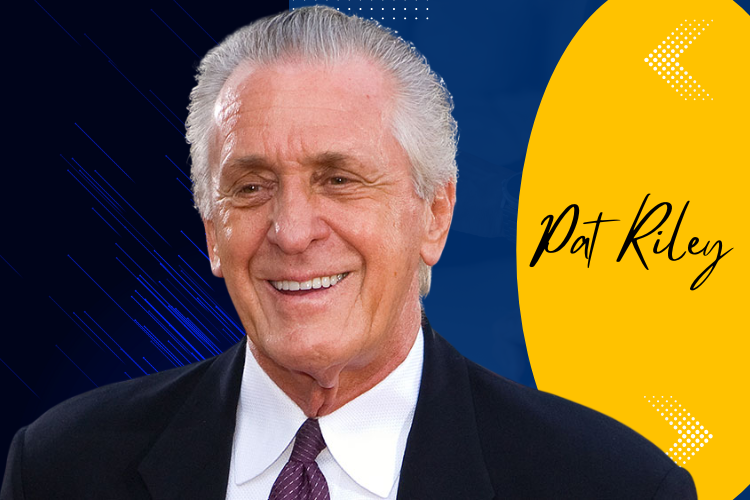
Pat Riley’s Early Life and College Basketball Career:
American basketball player, coach, and executive Pat Riley was born in Rome, New York, on March 20, 1945. He is considered by many to be one of the most successful coaches in the history of the National Basketball Association (NBA). Riley even tried to trademark the phrase "three-peat" in 1988 while he was head coach of the Los Angeles Lakers, even though the team had only won two straight titles at that time. Riley is regarded as one of the most fearless, affable, and successful individuals in the history of the sport, and his career and legacy were aptly represented in his audacious confidence.
Pat Riley accepted the pressure and made those difficult tasks his own at a time when many coaches were hesitant to accept positions in well-known places like Los Angeles or New York. Riley recognized out as one of the few coaches who ascended alongside NBA players during a time when they were first becoming true international superstars.
Pat Riley was a standout basketball and football player in his youth. He had one of the best collegiate basketball careers in the school’s history while playing for the University of Kentucky, where he was coached by the renowned Adolph Rupp. He guided the team to the NCAA championship game in 1966, but they were defeated by Texas Western University (now the University of Texas at El Paso) in a memorable match. The first team to win an NCAA championship with an all-African American starting lineup was Texas Western.
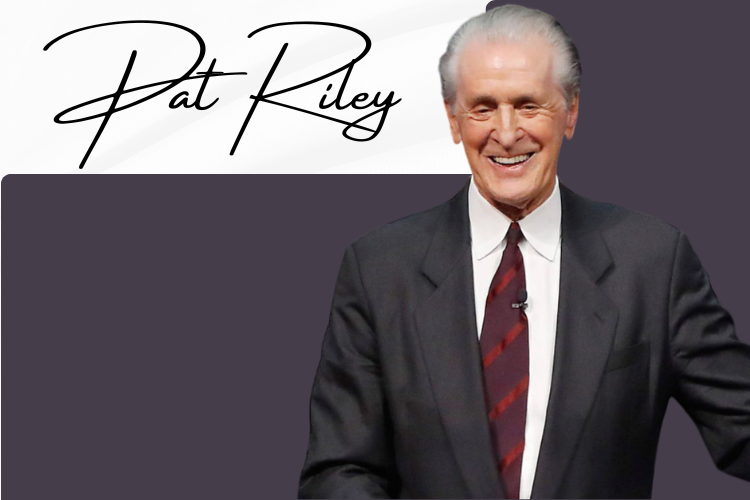
The San Diego Rockets selected Pat Riley in the first round of the 1967 NBA Draft. The Dallas Cowboys selected him in the National Football League Draft the same year. In the end, he decided on basketball. Although he was more of a supporting player than a star during his playing career, he did win an NBA championship with the Los Angeles Lakers in 1972.
Pat Riley became a broadcaster for the Lakers the year after retiring in 1976. He took over as head coach shortly after becoming an assistant coach in 1979. The Lakers won three additional titles under Riley (1985, 1987, and 1988). The team’s flamboyant, domineering style, which was centered on Magic Johnson and star center Kareem Abdul-Jabbar, came to be known as “Showtime.” They had a fierce rivalry with the Boston Celtics during the 1980s.
Pat Riley’s slicked-back hair and pricey outfits made him a representation of the daring, glitzy 1980s. In 1989, he sought another championship, but the Detroit Pistons, who were on the rise, ended the Lakers’ dominance. Riley resigned in 1990. He was named NBA Coach of the Year that season, but internal team strife played a major role in his decision to leave Los Angeles. (In 1993 and 1997, he would also be named Coach of the Year one more.)
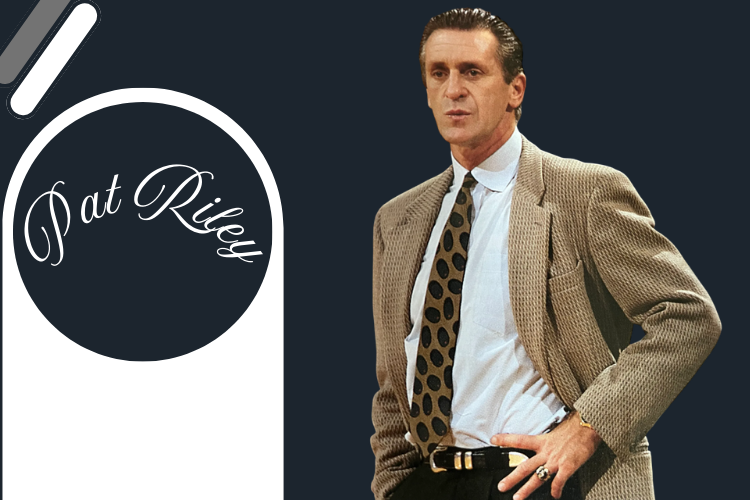
Pat Riley reappeared in 1991 as the New York Knicks’ head coach. He assembled formidable squads once more, but he was unable to win a championship. Riley’s versatility as a coach was demonstrated by the Knicks’ notable harsh, physical style of play, which contrasted sharply with the Showtime Lakers’ fast-paced style.
He started a bitter rivalry with his old team, the Knicks, as soon as he took over as head coach of the Miami Heat in 1995. Riley held that position until 2003, when he left to concentrate on front-office duties. But in the 2005–06 season, he made a comeback to the sidelines and led the team to yet another title under the leadership of Shaquille O’Neal and Dwyane Wade.
Pat Riley left coaching after the 2007–08 campaign, but he remained in the front office. He was instrumental in persuading LeBron James to sign with Miami in free agency in 2010, which helped the team win two more titles in 2012 and 2013. There was no denying Riley’s effect even if he was no longer the head coach.
Pat Riley is one of the most intriguing and significant individuals in basketball history, despite the fact that he is frequently made fun of or condemned for his sophisticated approach and intimidating demeanor. He became a member of the Naismith Memorial Basketball Hall of Fame in 2008.