
Peter Greene Final Years and Death at Age 60:
Actor Peter Greene was called "a big exposed nerve ending" by Entertainment Weekly in 1995. Greene, who passed away unexpectedly at the age of sixty, displayed his terrifying intensity in a number of well-known movies in the 1990s, such as Quentin Tarantino's insane comedy horror Pulp Fiction (1994).
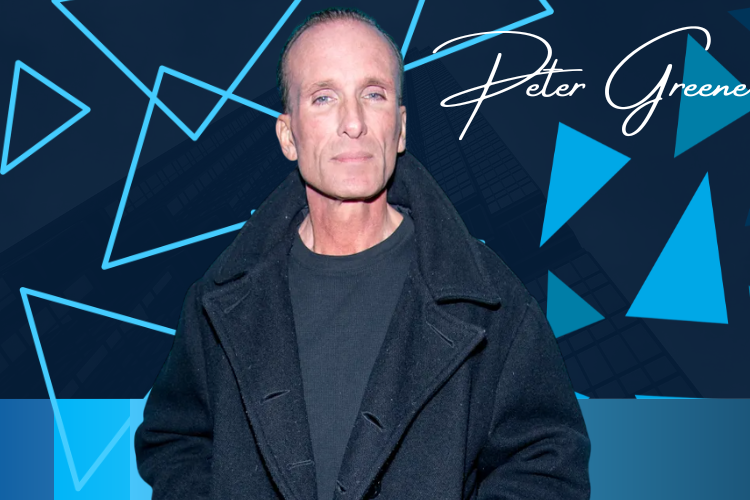
Peter Greene had a brief but memorable part as Zed, a dishonest security guard who used the “eeny-meeny-miny-mo” technique to choose which of two prisoners imprisoned in a pawnshop basement—a boxer (Bruce Willis) or a gangster (Ving Rhames)—he should attack first. The gangster’s associates torture him after shooting him in the crotch when the attack is stopped, which results in
Willis’s well-known statement, “Zed’s dead, baby.” Zed is no longer alive.
Peter Greene claimed that his initial hesitation to accept the part stemmed from his fear of upsetting his parents. “I said, ‘Okay,’ after they said, ‘No, do it.'”
He portrayed a considerably larger, but less threatening, antagonist in the hugely successful comedy The Mask that same year. Jim Carrey portrays a loser clerk who, when wearing a miraculous wooden mask, transforms into an extremely self-assured, invincible, green-faced joker. In the final scene, Greene, a vicious criminal, dons the mask himself.
In contrast to Carrey, it makes him unsettlingly weird instead of cartoonishly humorous. He has fiery red eyes and a forked tongue, which he uses to lick Cameron Diaz during her movie debut. The eventual result is that he is flushed into an ornamental pond that becomes a gigantic toilet. It’s the type of film that it is.
The Mask became the fourth highest-grossing film of 1994 with almost $351 million. The majority of moviegoers that year most likely remembered Greene’s visage, if not his name, because to Pulp Fiction, which brought in $213 million worldwide. He then made brief appearances in two more well-known thrillers, Training Day (2001) and The Usual Suspects (1995). Because of his ability to make even the tiniest role memorable, Christopher McQuarrie, the writer of the first movie, referred to him as a “million-dollar day player.”
However, none of those films did Peter Greene skill and dedication justice. Clean, Shaven (1993), an unyielding expressionist drama in which he portrayed a tormented father with schizophrenia who is trying to find his estranged daughter, deserves that distinction.
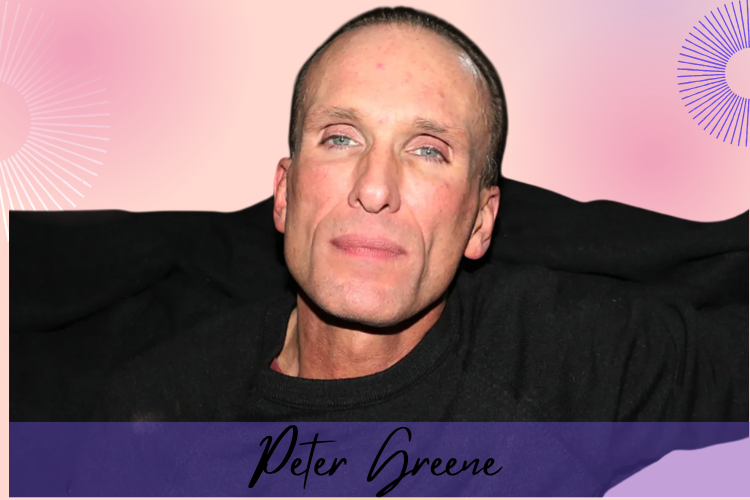
For just $60,000, first-time director Lodge Kerrigan shot the movie over two years, pausing production whenever funds ran low. Despite being Peter Greene’s first, it was published after Laws of Gravity (1992) due to its lengthy production. Peter Greene costarred with future Sopranos star Edie Falco in the story, which was set in Greenpoint, Brooklyn, among petty thieves.
Recalling his audition, Kerrigan said, “He didn’t have a resume or a headshot. He exuded vitality and had a genuine presence.
Peter Greene’s nervous, eerie portrayal provided a unique window into the schizophrenia experience, especially when combined with the film’s clumsy cinematography and confusing sound design.
At the Sundance Film Festival, many fainted or ran away when they saw him tearing at his own head or using a penknife to rip out a fingernail. Despite being hardly viewed, the movie gained a lot of appreciation. Later, in 2006, filmmaker John Waters adapted it for the TV series Movies That Will Corrupt You. Regarding Greene’s performance, another admirer, Steven Soderbergh, remarked: “Even when he’s resting, a lot is going on.”
In addition, Kerrigan described Greene’s range as “too much,” saying, “It would be a shame if he were typecast.”
But there weren’t many priests or good folks on his resume. A mercenary-turned-criminal in Coyote Run (also known as Sworn Enemies), a gangster in Judgment Night (1993), a terrorist in Under Siege 2 (1995), a dealer introducing a screenwriter (Ben Stiller) to crack cocaine in Permanent Midnight (1998), a diamond thief who betrays his crew in Martin Lawrence’s action comedy Blue Streak (1999), and a gangster in Judgment Night (1993) were all portrayed by Peter Greene.
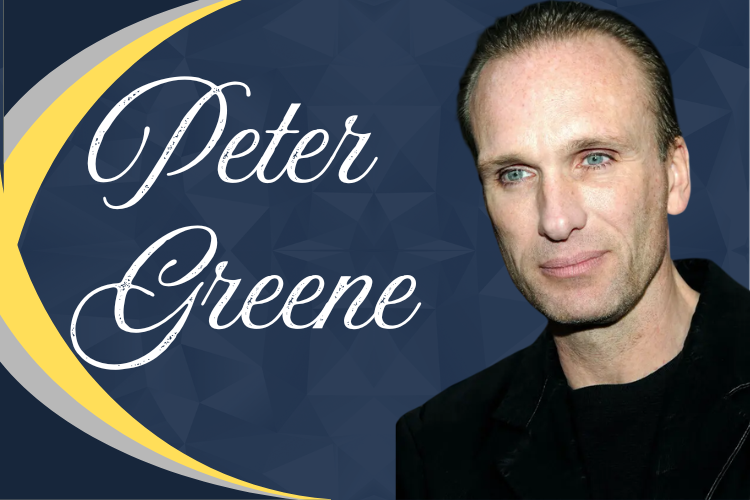
He added an extra “e” to his last name to set himself apart from other Screen Actors Guild actors. He was born Peter Green in New Jersey. Around that time, he started a risky drug-dealing phase of his life. His residence was once set on fire by other dealers because he owed them money.
He occasionally slept in theaters while homeless and somehow got involved in what he referred to as “off-off-off, way-off-Broadway” shows. He almost fell into acting by accident. His path was altered by coach Penny Allen, who encouraged him to try out for indie films, referring to him as “an actor who can face difficulty.”
Success made his drug use worse. “Many times when he arrived on set, he was completely under the influence of drugs and/or alcohol,” journalist and former personal assistant Mark Ebner stated in a 1996 interview with Greene for Premiere magazine.
(Perhaps this narrative would help some sick junkie get clean.)
A crack pipe discovered on the set of Judgment Night was discussed, along with “track marks” on his arm and attempts to purchase heroin in downtown Los Angeles.
But there were always admirers. “Peter Greene emotional life resonates so deeply and sits so close to the surface that he doesn’t know how to work any other way,” described Nick Gomez, director of Laws of Gravity, in reference to Robert De Niro’s “instinctive, natural” manner. That is both his strength as an actor and his weakness as a human.
The director of The Rich Man’s Wife, Amy Holden Jones, described him as “a mercurial person.” He is adored by the camera. He acts brilliantly and abruptly. And he’s a real terror.
Throughout his life, he continued to perform, albeit in less engaging movies. One exception was the unorthodox biopic Tesla (2020), which was directed by the avant-gardist Michael Almereyda and starred Kyle MacLachlan as Thomas Edison and Ethan Hawke as Nikola Tesla. It purposefully included anachronisms like as computers and Google searches.
Ironically, only movies with fleeting cameos were ones that Greene could enjoy.
“You see the mistakes,” he said. I sat in the lobby at the premiere of The Mask. Peter Greene married a friend who need a green card when he was twenty years old. Despite their quick separation, the marriage was never formally dissolved.