
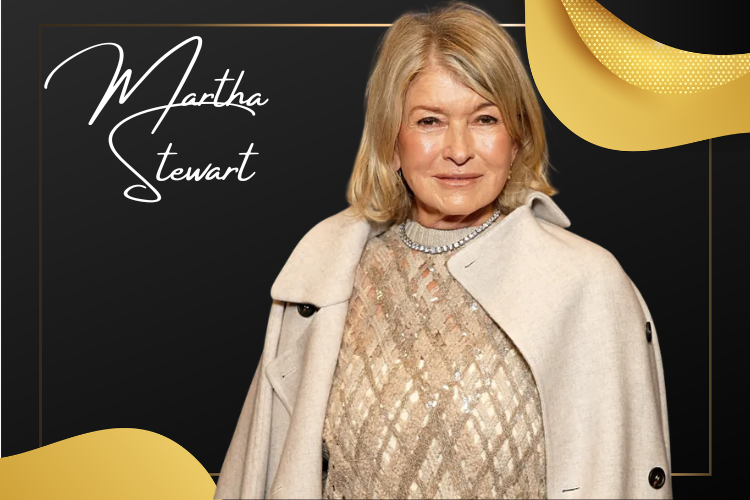
Martha Stewart Early Life:
American businesswoman Martha Stewart was born in Jersey City, New Jersey, on August 3, 1941. She is credited with creating contemporary domestic lifestyle branding. She turned a modest catering company into Martha Stewart Living Omnimedia, Inc., a global media and home products conglomerate.
Martha Kostyra was raised in a Polish American home in Nutley, New Jersey, where traditional skills like sewing, cooking, canning and preserving, housekeeping, and gardening were commonplace. She was planning birthday parties for the kids in the neighborhood even when she was in grammar school. She worked as a model in New York City to pay for education.
She met Andrew Stewart, a law student, at Barnard College, where she earned a B.A. in European History and Architectural History in 1963. Alexis, their daughter, was born in 1965 after they were married in 1961. Martha was a stockbroker with a modest Wall Street firm from 1965 to 1972. She later relocated to Westport, Connecticut, with her family, where she concentrated on renovating Turkey Hill, a farmhouse built in the Federal style. She worked diligently to refurbish the house, tend to its grounds, and create the stunning backdrop that would eventually serve as the inspiration for her television series and novels.
Stewart and partner Norma Collier started a catering company in 1976. Her originality and presenting skills soon brought her well-known clientele. The tone for her subsequent books was established by her debut book, Entertaining (1982, co-authored with Elizabeth Hawes), which included exquisite art direction, breathtaking settings, intricate recipes, and ornamental projects. Additionally, she oversaw CBS Masterworks Dinner Classics, a compilation of music created to create the ideal soundtrack for special meals, Sunday brunches, cocktail parties, and picnics.
Due to the ongoing popularity of books like Martha Stewart’s Weddings (1987) and Hors d’Oeuvres (1984), Time Publishing Ventures, Inc. teamed up with Stewart to start the monthly magazine Martha Stewart Living in 1990. She was the magazine’s main figure in addition to being its editor-in-chief. She started a syndicated television program with the same name in 1993, and it aired until 2004.
She bought the magazine from Time Warner Inc. in 1997, using the money she made from her merchandising contract with Kmart, where her “Martha Stewart Everyday” brand of home items was sold. She got closer to her ultimate objective of creating a multi-channel media and marketing organization with each of these calculated actions.
Stewart was momentarily became a billionaire when her business went public. Nevertheless, the business found it difficult to sustain steady profitability during the ensuing ten years.
Stewart authorized the sale of 4,000 shares in ImClone Systems, a biomedical company owned by Samuel Waksal, a family friend, in December 2001.
Insider trading accusations resulted from the sale of the shares one day prior to the stock price plummeting due to public disclosure. Stewart left her position as chairman and CEO of her company in 2003 to become chief creative officer, removing herself from day-to-day operations and concentrating on defending herself against accusations of obstructing justice and lying to investigators.

She was found guilty in 2004 and sentenced to five months in jail and five months on home confinement. She urged her supporters to keep supporting her company at this period. In 2010, she was appointed chief editorial, media, and content officer of Martha Stewart Living Omnimedia, after she made a comeback to daytime television with Martha (2005–2012). She returned to the company’s board and took on the chairmanship in 2012 following the expiration of a 2006 settlement with the Securities and Exchange Commission.
It was revealed in 2015 that Sequential Brands would purchase Martha Stewart Living Omnimedia for about $350 million. The business was once valued at about $2 billion at its height. Stewart remained chief creative officer as part of the agreement. She also kept up a prominent profile on television with shows like Martha Bakes (2011–), Martha & Snoop’s Potluck Party Challenge (2016–), and Bakeaway Camp with Martha Stewart (2020–).
Stewart’s meticulousness, attention to detail, and strong work ethic were not always commended as she grew her business. Some believed that her glorification of domestic life was a step backward for women, while others said that she set unrealistic standards for working mothers. She did, however, have a devoted following, and her great personal appeal and unquestionable commercial success more than offset much of the criticism.