
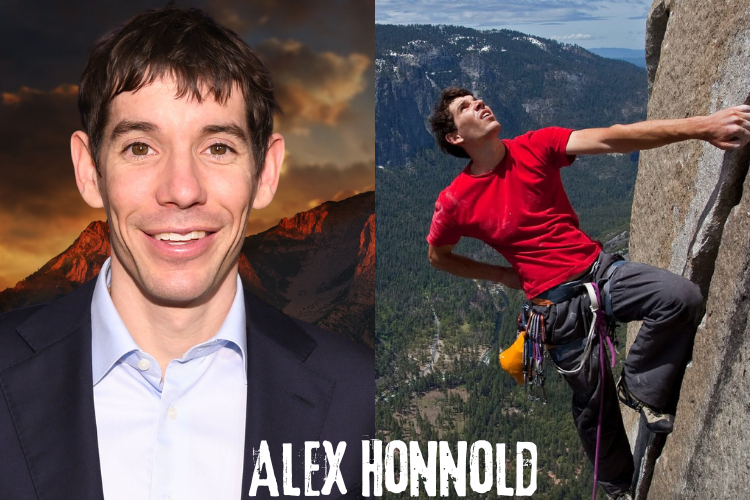
Who Is Alex Honnold?
American professional big-wall rock climber Alex Honnold was born in Sacramento, California, on August 17, 1985. He is most known for his audacious free solo climbs—climbing without the use of ropes—on some of the highest rock faces in the world. With the release of the documentary Free Solo in 2018, which documented his successful effort to become the first person to free solo the El Capitan rock formation in Yosemite National Park, he became well-known throughout the world.
Alex Honnold is the younger of two children born to community college instructors Charles Alex Honnold and Dierdre Wolownick. Growing up in Sacramento, California, he started climbing at a nearby gym when he was five years old. When he was younger, his sister Stasia began climbing with him, but she eventually switched to other activities. After six years, Alex was competing in indoor events all over the state and climbing nearly every day. He was among the best competitive indoor climbers in the US by the time he was eighteen.
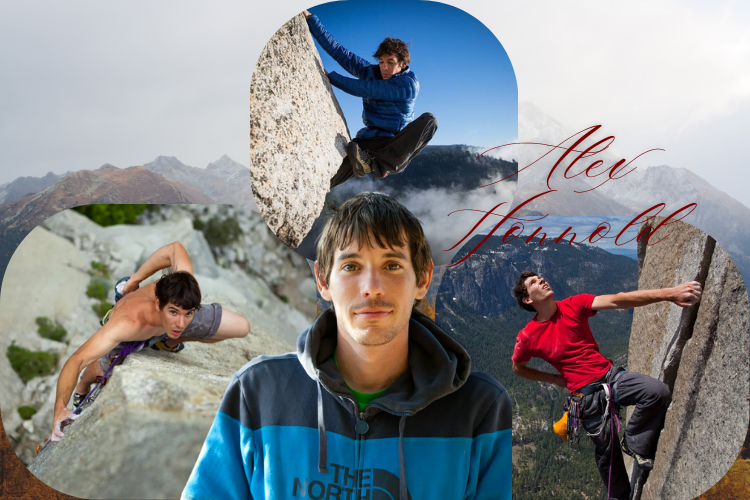
Alex Honnold enrolled to the University of California, Berkeley with the intention of majoring in civil engineering after graduating from Mira Loma High School in 2003. His parents divorced the same year, and he started skipping school to climb rocks in nearby parks as a way to deal with the stress and anxieties at home. His father passed away from a heart attack the next summer. Honnold chose not to go back to college since his mother supported his desire to pursue a career in climbing.
In order to improve his climbing abilities, Honnold moved across California in 2004 and started living out of his mother’s old minivan. He was lured to free soloing right once, in part because, as a timid person, it seemed simpler to climb alone than to locate a partner. He started researching the history of free solo climbing in 2006 by reenacting well-known ascents by legends like Dean Potter, Peter Croft, and John Bachar. He would regularly rehearse a route with ropes before trying a free solo ascent.
When he successfully free soloed Yosemite’s Astroman and the Rostrum North Face in a single day in September 2007—matching Peter Croft’s incredible 1987 accomplishment—he became well-known in the climbing community. He also finished free climbing the Salathé Wall and Freerider routes on El Capitan that same year. He was able to live the traditional “dirtbag climber” lifestyle—living on the road and devoting himself full-time to climbing—thanks to the sponsorships he received from these climbs.
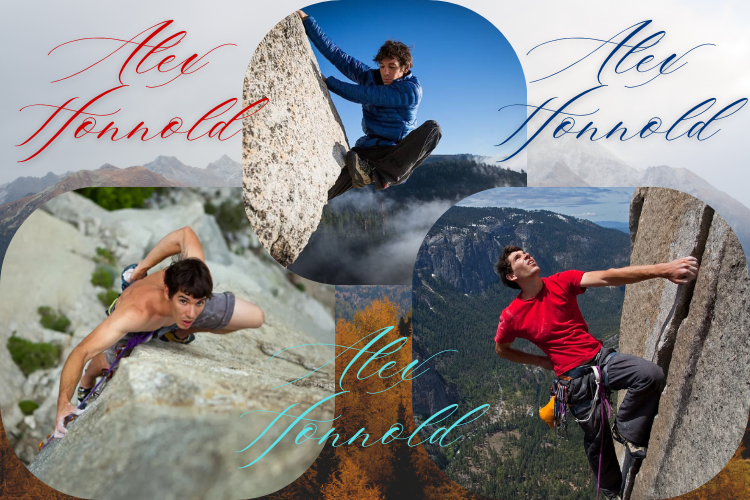
Alex Honnold made climbing history in 2008 when he became the first person to free solo Yosemite’s Regular Northwest Face of Half Dome. Croft referred to it as “the most impressive ropeless climb ever done” at the time. For the 2010 documentary Alone on the Wall, Alex Honnold recreated the ascent. 2016 saw the release of his autobiography of the same name, which he co-wrote with David Roberts.
Alex Honnold set records with climbing companions in addition to his solo accomplishments. He and Tommy Caldwell climbed and descended seven peaks along a 3-mile (5-kilometer) ridgeline in five days in 2014, making history as the first team to finish the Fitz Roy Traverse in Patagonia. Honnold and Colin Haley finished the Torre Traverse’s second-ever ascent in 2016, which was also the first one-day ascent in Patagonia.
The 3,300-foot (1,000-meter) Freerider route on El Capitan was free soloed by Alex Honnold in 2017. It might be “the greatest feat of pure rock climbing in history,” according to National Geographic. The 2018 release of Free Solo, which chronicles the years of meticulous preparation and training behind the climb and concludes with breathtaking footage of the ascent itself, brought this career-defining accomplishment even more attention.
The movie also examines Honnold’s relationship with Sanni McCandless, his former lover, and highlights his caustic sense of humor. Both climbers and non-climbers appreciated Free Solo, which went on to win the 2019 BAFTA Award for Best Documentary and the Academy Award for Best Documentary Feature.
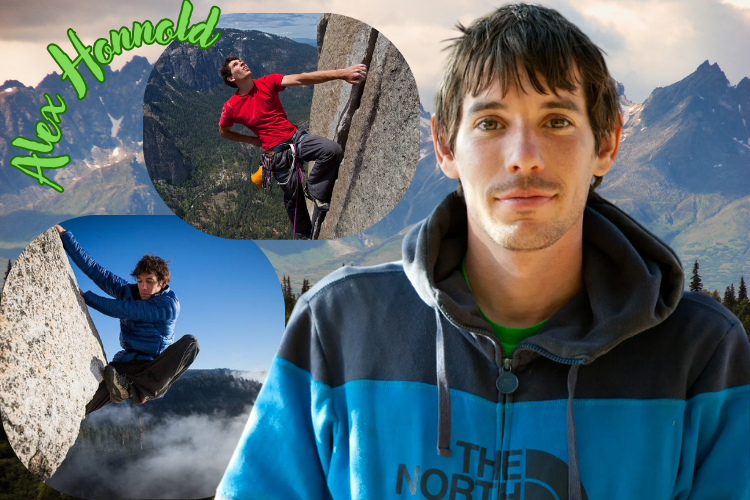
In the years that followed the El Capitan ascent, Honnold acknowledged that he wasn’t totally sure what to do after completing what is often regarded as the most difficult climb in the sport. “As much as [El Cap] drew me in, nothing else has quite the same pull,” he stated in a 2021 interview with the Harvard Business Review. Really, nothing else in the world compares to it. I’ve had trouble with that.
Nevertheless, he kept taking on new climbing obstacles. Notably, he and Tommy Caldwell collaborated once more in 2018 to shatter the speed climbing record on El Capitan’s Nose route. In just one hour, fifty-eight minutes, and seven seconds, the pair broke the two-hour time limit.
The first free-climbing ascent of Ingmikortilaq, a 3,750-foot (1,150-meter) granite and gneiss sea cliff rising from a fjord on Greenland’s eastern coast, was accomplished in 2022 by Honnold and Hazel Findlay. In order to promote scientific studies on climate change, the expedition set out to gather data on ice caps and climate observations. National Geographic recorded the multi-day ascent, which was subsequently published as a three-part series called Arctic Ascent with Alex Honnold (2024).
After getting married in 2020, Honnold and Sanni McCandless had two kids, June and Alice. The couple’s heated discussions about how much risk Honnold was ready to face while climbing are captured in Free Solo. Honnold has stated that he is now much more circumspect about accepting free solo assignments after starting a family. In addition to his climbing career, Honnold established the Honnold Foundation in 2012, which funds solar energy initiatives globally.