
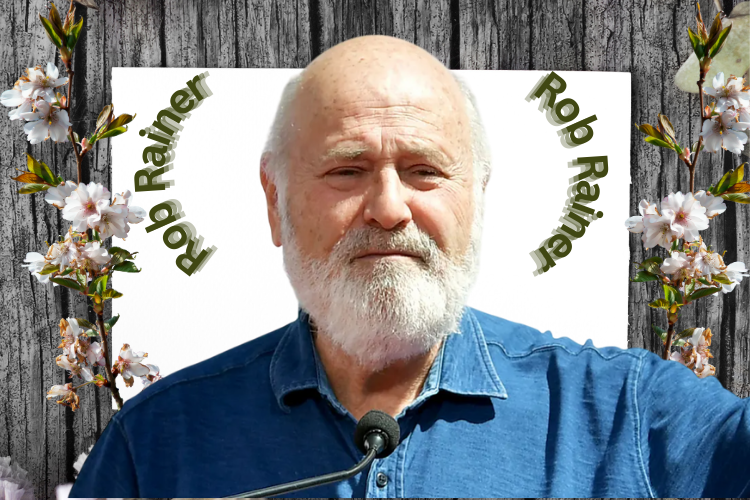
Rob Reiner:
American actor and director Rob Reiner was born in the Bronx, New York, on March 6, 1947, and passed away in Los Angeles, California, on December 14, 2025. This Is Spinal Tap (1984), The Princess Bride (1987), When Harry Met Sally (1989), and A Few Good Men (1992) are just a few of the culturally significant movies he directed. But his most well-known performance was as Michael (“Meathead”) Stivic in the 1971–79 television series All in the Family.
Rob Reiner was the oldest of two employees in the entertainment industry. His mother was jazz singer and actress Estelle Reiner, and his father was comedian Carl Reiner, who started The Dick Van Dyke Show (1961–1966). After growing up in the Bronx and then New Rochelle, New York, Reiner and his family relocated to Los Angeles in 1959.
He went to Beverly Hills High School with future performers Albert Brooks and Richard Dreyfuss. At the age of 19, he directed Dreyfuss in a theater version of Jean-Paul Sartre’s No Exit in addition to performing in summer stock musicals. From 1964 to 1966, Rob Reiner was a student at the University of California, Los Angeles, when he helped form the improv group The Session. He soon left to join a new, more politically oriented improv company in San Francisco called The Committee.
Rob Reiner started making appearances on TV shows like The Beverly Hillbillies, Hey, Landlord, and The Andy Griffith Show. His father’s first feature film, Enter Laughing (1967), marked his big-screen debut. Based on his father’s memoirs, he had previously acted in stage stock performances. Comedian Tommy Smothers hired Rob Reiner as a writer for The Smothers Brothers Comedy Hour (1967–68) after seeing him perform with The Committee. He wed Penny Marshall, an actress and director, in 1971; they separated in 1979.
When Rob Reiner was chosen to play Michael (“Meathead”) Stivic in the popular sitcom All in the Family (1971–79), it was his big break. His on-screen father-in-law, portrayed by Carroll O’Connor, was a boisterous and unrepentant bigot, and his character, a free-thinking hippy, was frequently pitted against him. Their confrontations turned into a major source of humor and gave the program the opportunity to address some of the most contentious topics of the day, particularly the Vietnam War and the civil rights movement. For this performance, Rob Reiner received the 1974 and 1978 Emmy Awards for Best Supporting Actor in a Comedy Series.
Following his success on the show, Rob Reiner focused on directing, beginning with the television movie Sonny Boy in 1974. His earliest major success as a director came with This Is Spinal Tap (1984), a sharp and humorous mockumentary that playfully skewered the world of rock music. Comedians Christopher Guest, Harry Shearer, and Michael McKean, who played members of a dysfunctional heavy metal band, collaborated with him to make the movie. Marty DiBergi, the director of the documentary, was played by Reiner. The film’s deadpan comedy eventually turned it into a cult favorite, and a large portion of the dialogue was improvised.
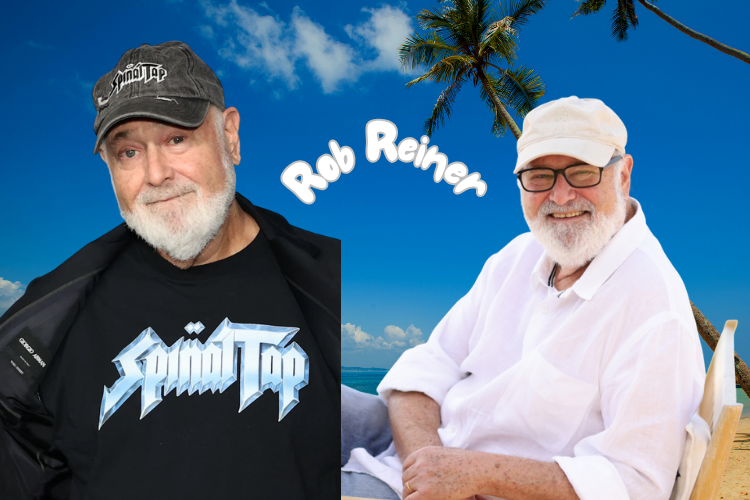
Based on a Stephen King story, his next movie, Stand by Me (1986), was a compelling coming-of-age narrative about a gang of boys looking for a dead corpse. Young stars like River Phoenix and Kiefer Sutherland had their careers launched by the film, which became a cult favorite. Many of Rob Reiner’s subsequent films were produced by Castle Rock Entertainment, which he co-founded in 1987. (The business was sold to Turner Broadcasting System in 1993, and after Time Warner purchased it in 1996, it joined Warner Bros.)
Rob Reiner followed up with The Princess Bride (1987), adapted from a novel by William Goldman. A playful fantasy that gently mocked its own genre, the film blended adventure, romance, and sharp, witty dialogue, featuring performances by Robin Wright, Cary Elwes, and Billy Crystal. His romantic comedy When Harry Met Sally… (1989), starring Crystal and Meg Ryan as friends who slowly fall in love, is widely credited with setting the modern standard for the genre.
He then explored darker material with Misery (1990), another Stephen King adaptation. Kathy Bates delivered a powerful yet deeply human performance as Annie Wilkes, a deranged fan who imprisons a writer, played by James Caan. For the performance, Bates was awarded the Academy Award for Best Actress. Rob Reiner’s courtroom drama A Few Good Men (1992) centered on the court-martial of two Marines accused of causing a fellow soldier’s death. The film featured an all-star cast, including Tom Cruise, Demi Moore, Kevin Bacon, and Jack Nicholson, whose thunderous line—“You can’t handle the truth!”—became iconic. It went on to be shortlisted for the prestigious Best Picture Oscar.
Rob Reiner’s next film, North (1994), about a young boy (Elijah Wood) who goes in search of new parents, was widely mocked by critics as tasteless and offensive. However, The American President (1995), a romance between a widowed U.S. president (Michael Douglas) and a lobbyist (Annette Bening), and Ghosts of Mississippi (1996), which focused on the 1994 trial of Byron De La Beckwith, the assassin of civil rights leader Medgar Evers, were received more warmly.
His fortunes improved somewhat with The Bucket List (2007), a comedy-drama about two terminally ill men who set out to fulfill their life wishes before dying. While critics were lukewarm, audiences embraced the pairing of Morgan Freeman and Jack Nicholson, and the film performed well at the box office. Flipped (2010), a teenage romance, failed to find a wide audience, as did The Magic of Belle Isle (2012), despite praise for Freeman’s performance as a troubled writer. Reiner’s next effort, And So It Goes (2014), a romantic comedy starring Diane Keaton and Michael Douglas, was harshly panned and flopped commercially.
The partially autobiographical Being Charlie (2015), written by Reiner’s son Nick, explored the painful relationship between a young man struggling with addiction and his politician father, played by Cary Elwes. The film received recognition for its truthful depiction of addiction. Reiner later returned to political themes with LBJ (2016), a biopic about Lyndon B. Johnson’s rise to the U.S. presidency, and Shock and Awe (2017), which followed a group of journalists covering the lead-up to the 2003 invasion of Iraq. Reiner also appeared in the latter film as the journalists’ boss.
Reiner continued to act occasionally in films, notably as a television network executive in the forward-looking reality-TV satire Edtv (1999) and as the spendthrift father of Jordan Belfort (Leonardo DiCaprio). He remained active on television as well, playing Zooey Deschanel’s character’s father on the sitcom New Girl from 2012 to 2018. He also appeared in shows like Hannah Montana, Wizards of Waverly Place, 30 Rock, and Happyish, often in warm, lovable uncle-type roles. Reiner was chosen to play a movie company boss in the miniseries Hollywood (2020).
Beyond entertainment, Reiner was deeply involved in liberal political causes. He actively campaigned for early childhood education and healthcare, directed the television documentary I Am Your Child (1997), and successfully advocated for tobacco-tax funding in California in 1998. From 1999 to 2006, he headed the state agency responsible for distributing those funds. Reiner also campaigned for LGBTQ+ rights, playing a key role—alongside the American Foundation for Equal Rights—in the successful legal challenge to overturn Proposition 8, the 2008 law that had made same-sex marriage illegal in California.