
Sonny Rollins Passes Away at 95:
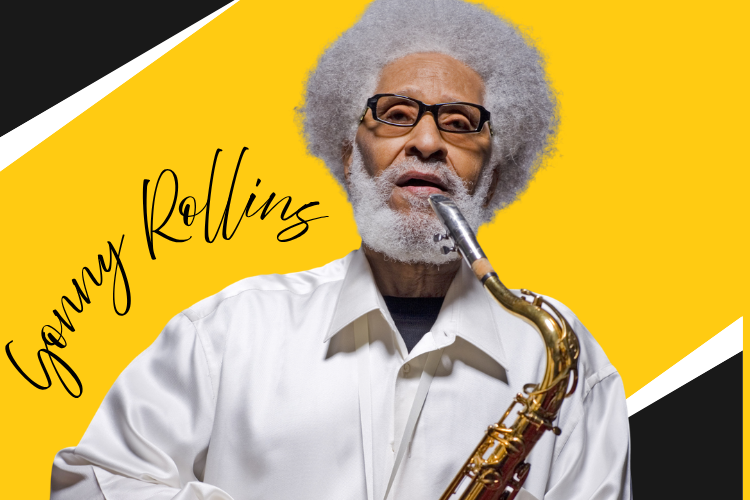
Sonny Rollins, regarded as one of the greatest jazz saxophonists of all time, died at the age of 95. His official website announced his death on Monday “with deep sadness and immense love.” His spokesperson, Terri Hinte, also confirmed the details. The announcement stated that the famous “Saxophone Colossus” passed away on Monday afternoon at his Woodstock home, although it did not specify the cause of death.
Reflections on Life and Death:
The message also contained Sonny Rollins‘ personal reflections about death: “I think that when a creative person dies, their impact and spirit continue to exist in a different form. I don’t think this life is the end, and it’s not everything. A spiritual person does not see things that way.
A Giant of Jazz and Bebop Era:
Beginning in the late 1940s, Sonny Rollins worked on over 60 records with legendary jazz musicians like John Coltrane, Thelonious Monk, and Miles Davis. He was among the final prominent members of the bebop generation, which transformed jazz from dance music and ballads to a very creative and expressive art form.
Master of Melody and Improvisation:
Sonny Rollins was a master of melody. He has a unique talent for rewriting, developing, and reconstructing melodies through his impromptu and frequently epic improvisations, whether he is performing jazz standards or his own creations. Saxophonist Branford Marsalis has called him and Louis Armstrong “the greatest improviser in jazz history.” Obama said that Rollins inspired him “to take risks I might never otherwise have while presenting him with the 2010 National Medal of the Arts in 2011.
Early Life in Harlem:
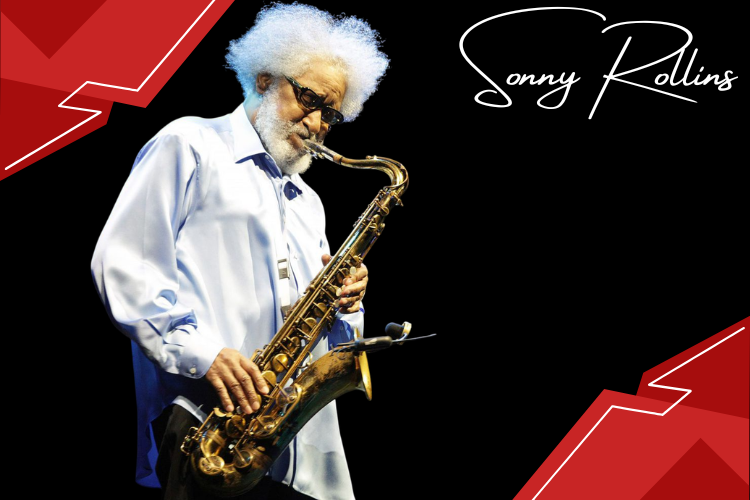
He grew up in the Harlem neighborhood of New York City after being born Walter Theodore Sonny Rollins in 1930. His grandma referred to him as “Sonny.” Inspired by jazz greats like Louis Jordan and Fats Waller, as well as by his sister’s piano playing and brother’s violin playing, he began learning the saxophone at the age of seven.
His first high school band included future greats like Jackie McLean, Kenny Drew, and Art Taylor because Harlem’s jazz scene was so thriving. Soon after graduating, he started creating his own songs and performing with both local artists like Bud Powell and traveling musicians like J. J. Johnson.
Musical Philosophy and Bebop Influence:
It is well known that Rollins described himself as “primitive… I go more by my feelings than my mind.” He was able to completely embrace improvisation and challenge social norms because of this brave approach. Together with artists like Miles Davis and Charlie Parker, he helped transform bebop into the more free-spirited and lively genres of hard bop and post-bop. According to Davis’s subsequent narrative, Rollins became “a legend,” even “almost like a god” among younger musicians, due to his bold experimentation and endless supply of musical ideas.
Views on Jazz and Creativity:
Sonny Rollins once remarked, reflecting on his childhood:
“Jazz is amazing. It’s not just music for dancing or preaching. It has everything. It doesn’t motivate you to fight or hurt other people. Rather, it gives you the impression that God exists.
Struggles with Addiction and Recovery:
Despite his accomplishments, Sonny Rollins struggled with heroin addiction. In 1950, he committed an armed robbery to finance his heroin addiction. He later described himself as “truly a terrible person” during the time and admitted that he had driven almost everyone away save his mother. A recovery program helped him conquer his addiction in 1955 after he spent ten months incarcerated in the Rikers Island jail in New York.
Rise After Recovery and Iconic Albums:
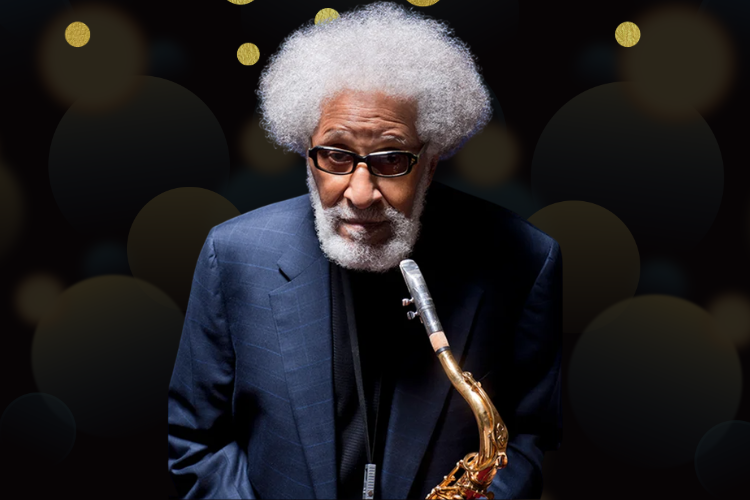
After he cleaned up, his creativity bloomed. After recording his first album as a bandleader in 1953, Sonny Rollins made 17 more albums by the end of the decade. One of the most well-known was the album Saxophone Colossus (1956), which featured his signature tune St. Thomas. The song was inspired by calypso music and was named after his mother’s birthplace in the Caribbean.
Experimentation and Musical Innovation:
Way Out West (1957), another ground-breaking record, experimented with a piano-free approach called “strolling.” Then came Freedom Suite (1958), which had a 20-minute title track that turned into a potent artistic declaration in favor of the expanding civil rights movement. During this time, he worked with greats including Dizzy Gillespie, Max Roach, and Art Blakey.
Breaks, Practice, and The Bridge:
To hone his skills, Sonny Rollins took a three-year hiatus from recording and live performances in 1959. In order to avoid disturbing his neighbors, he allegedly practiced on the Williamsburg Bridge pedestrian walkway for up to fifteen hours every day. His 1962 comeback album, The Bridge, was later influenced by that encounter.
Spiritual Journey and Fusion Era:
He took another vacation from 1969 and 1971 to study yoga, philosophy, and meditation at an Indian ashram. He kept experimenting with new approaches to jazz and fusion music throughout these decades.
He dabbled with Latin American sounds on What’s New? While maintaining melody, albums such as Sonny Meets Hawk! East Broadway Run Down pushed the boundaries of improvisation into bold new territory. He worked with musicians like Patrice Rushen and Stevie Wonder in the 1970s, including R&B motifs into his compositions. He also composed and performed the music for Michael Caine’s 1966 film Alfie, with the exception of Cilla Black’s main theme song.
Later Career and Environmental Awareness:
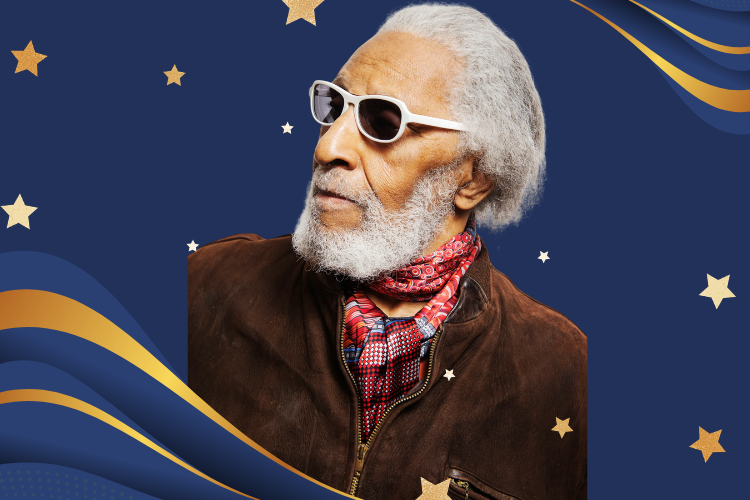
Sonny Rollins kept fusing calypso and funk into his songs throughout the 1980s. He even contributed an uncredited solo to The Rolling Stones’ song “Tattoo You.” At about the same time, he shifted his concentration from smokey jazz bars to big concert halls. To increase awareness of climate change, he also released the CD Global Warming and planned charity performances. He once remarked, “Right now it feels like we’re on the Titanic, and everyone is just watching the Titanic,” in reference to the environmental disaster.
Personal Life and Marriage:
Sonny Rollins had two marriages. In 1957, he had a brief first marriage to Dawn Finney. He married Lucille Pearson, his second wife, in 1965 after meeting her that same year. They remained together till her death in 2004.
9/11 Experience and Legendary Performance:
The pair was at home six blocks from the World Trade Center on September 11, 2001, when the terrorist strikes occurred. Sonny Rollins only brought his saxophone when they later relocated to upstate New York. He traveled to Boston three days later, where he gave an incredible live performance that was eventually published as Without a Song: The 9/11 Concert. The performance earned him a Grammy Award for Best Jazz Instrumental Solo. I lost a lot of priceless items after the 9/11 tragedy, and I discovered that material belongings are not everything.
Awards and Final Years:
He was given a Grammy Lifetime Achievement Award in 2004. After being diagnosed with pulmonary fibrosis in 2014, Sonny Rollins stopped from touring and performing for decades. “I went through a period of depression; I was truly very sad,” he acknowledged in 2017. He clarified that losing his ability to play music was painful because it had always been his life’s mission. But in the end, he felt thankful and at peace: I came to the realization that I should be grateful rather than depressed. All I ever wanted was to be able to live as a musician.
Legacy and Final Thoughts:
“To reach a place where my progress never stops” was Rollins’ stated objective. He maintained that he had much more to accomplish even in 2013, just before retiring:
“People tell me to calm down, Sonny. Your legacy is safe. You’ve accomplished everything; you’re the legendary Sonny Rollins. I thought, “To hell with Sonny Rollins,” when I hear it. Sonny Rollins is far from where I want to go. Much, much farther.