
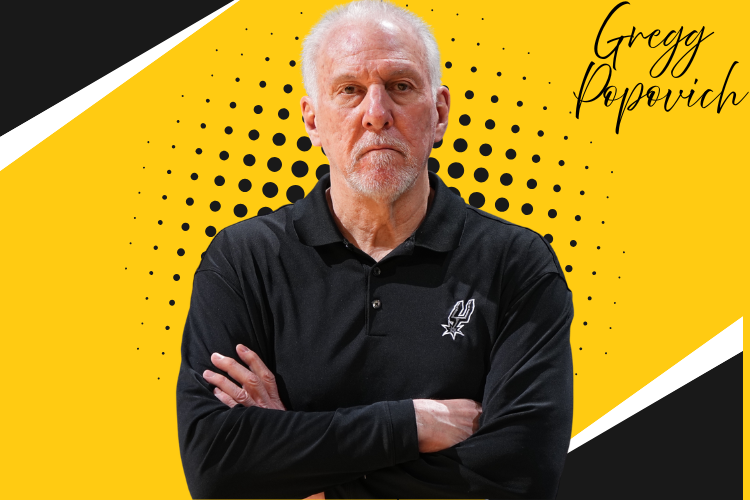
Gregg Popovich Early Life and Education:
American basketball coach Gregg Popovich was born in East Chicago, Indiana, on January 28, 1949. He is most renowned for winning NBA titles with the San Antonio Spurs in 1999, 2003, 2005, 2007, and 2014. With 1,390 regular-season victories, he is the NBA’s most successful head coach. With 170 playoff victories, he is ranked third, behind Pat Riley and Phil Jackson. Popovich was the head coach of the Spurs for 29 seasons before retiring in 2025.
Gregg Popovich, who is of Croatian and Serbian descent, was a basketball player at the US Air Force Academy. In addition to being the team captain for the 1969–70 campaign, he was the top scorer in his senior year. After graduating with a degree in Soviet studies, he went on to the University of Denver to acquire a master’s degree in sports science and physical education.
He served in the Air Force for five years, traveling throughout the Soviet Union and Eastern Europe. Additionally, he served as captain of the Armed Forces basketball team that won the Amateur Athletic Union title in 1972. Despite not making the final roster, Gregg Popovich was invited to the 1972 U.S. Olympic basketball team’s training camp.
Coaching Career Beginnings:
Gregg Popovich spent eight years (1979–86 and 1987–88) as an associate professor and basketball coach at Pomona-Pitzer Colleges in Claremont, California, following a brief stint as an assistant coach at the Air Force Academy. He served as a volunteer assistant to University of Kansas head coach Larry Brown during the 1986–87 campaign. He rejoined Brown as an assistant coach for the Spurs in 1988–89.
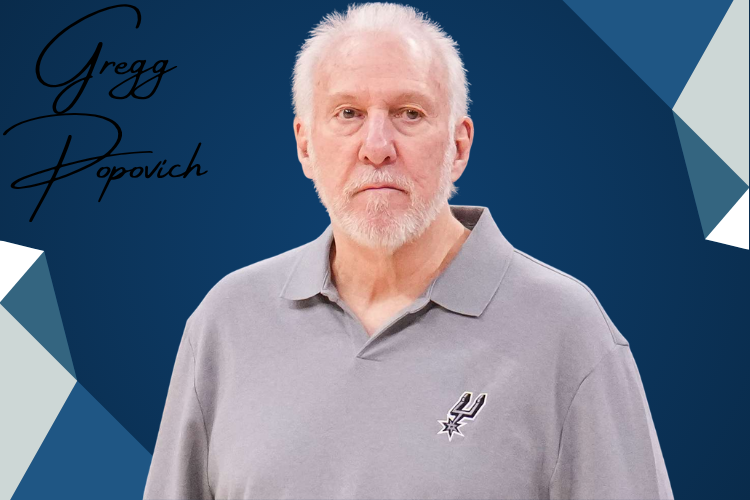
Before returning to San Antonio in 1994–1995 as executive vice president and general manager of basketball operations, Gregg Popovich began working for the Golden State Warriors in 1992. After the Spurs’ first eighteen games of the 1996–97 season, Popovich was appointed head coach.
Building the Spurs Dynasty:
A Spurs squad formed around the renowned “Twin Towers” duo of Tim Duncan and David Robinson, two of the most formidable post players in NBA history, was soon dominated by Popovich. In 1999 and 2003, when Gregg Popovich won his first NBA Coach of the Year title, they led San Antonio to NBA titles.
Duncan continued to be the focal point of the Spurs dynasty even after Robinson retired. Gregg Popovich’s biggest talent, according to former Air Force coach and later Spurs assistant Hank Egan, was his ability to manage people, make wise judgments at the right times, and know precisely how much pressure to put on players both on and off the court.
These attributes enabled him to fully utilize the skills of worldwide celebrities Manu Gincéili and Tony Parker. Together with Duncan, the three were the backbone of San Antonio’s success; they swept the Cleveland Cavaliers in the 2007 NBA Finals and won another championship in 2005 by defeating the Detroit Pistons in seven games.
Playoff Challenges and Comebacks:
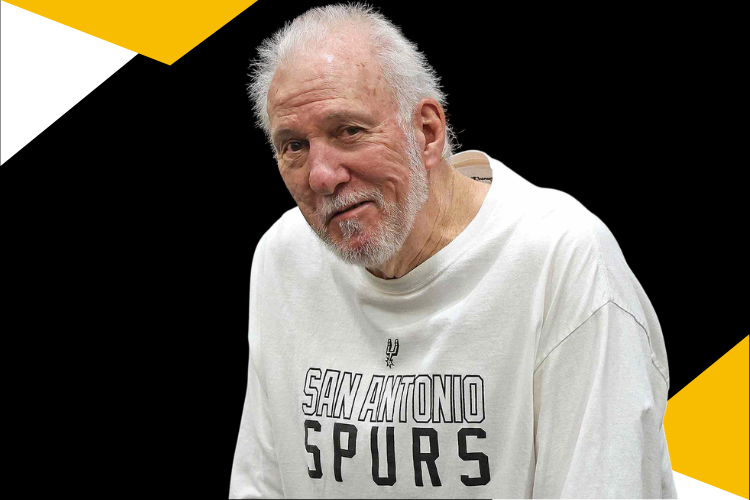
Gregg Popovich led the Spurs to the Western Conference Finals in the 2007–08 season, where they were defeated by the Los Angeles Lakers. Despite having the top seed in the Western Conference, San Antonio experienced dismal playoff exits in the next years, including an unexpected first-round loss to the Memphis Grizzlies in 2010–11.
Gregg Popovich won his second Coach of the Year title in 2011–12 after turning an older Spurs club into the best-performing team in the NBA. Despite their surprising conference finals loss to the Oklahoma City Thunder, the Spurs recovered the next season and advanced to the NBA Finals. They lost to the Miami Heat in a devastating seven-game match there.
Fifth NBA Championship and Continued Success:
Popovich won his third Coach of the Year award in 2013–14 after leading San Antonio to the best record in the league once more. The Spurs profited from the emergence of rookie forward Kawhi Leonard even if they still mainly relied on Duncan, Parker, and Gincéili. The Spurs made a comeback to the NBA Finals that postseason, defeating the Heat in five games to win the team’s fifth championship and setting multiple records for offensive efficiency.
Popovich maintained San Antonio as one of the NBA’s top regular-season teams for the following two seasons, including a franchise-high 67 victories in 2015–16. But the club found it difficult to go far in the playoffs. The Spurs advanced to the Western Conference Finals for the tenth time under Popovich in 2016–17, but the club was swept by the Warriors due in large part to Leonard’s season-ending injury in Game 1.
Final Years with the Spurs:
The Spurs made it to the playoffs for an incredible 21st consecutive season despite Leonard missing the most of the 2017–18 campaign due to injury. The rebuilt Spurs made it to the postseason in 2018–19 after trading an unhappy Leonard over the offseason, but they ultimately lost in seven games in the first round.
San Antonio underperformed and missed out on the playoffs in the ensuing seasons. Popovich had a stroke early in the 2024–2025 season. He declared in May 2025 that he will stay with the Spurs organization as president of basketball operations but would not be coaching again.
Team USA and Hall of Fame Recognition:
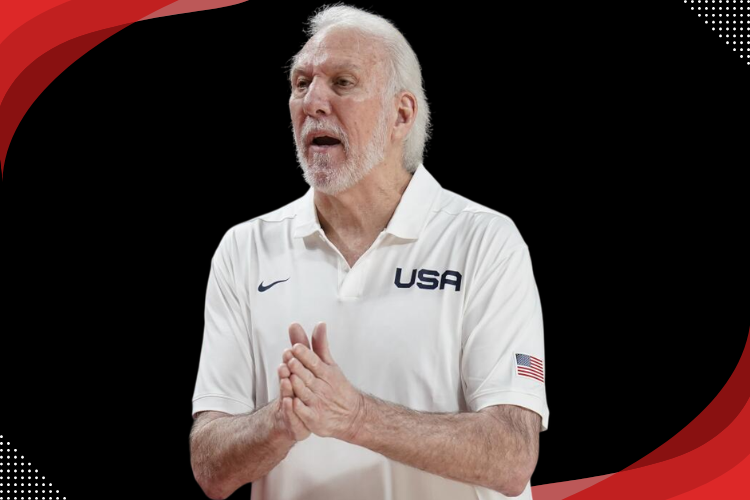
In 2016, Popovich took over as head coach of the US men’s national basketball team in addition to his responsibilities with the Spurs. He coached Team USA to a gold medal at the 2020 Tokyo Olympics, which were held in 2021 because to the COVID-19 epidemic, after helping them get off to a sluggish start. In 2021, Steve Kerr succeeded Popovich as Team USA’s head coach. Popovich was admitted into the Naismith Memorial Basketball Hall of Fame in 2023.