
Jackie Chan Early Life:
Chinese stuntman, actor, and director Jackie Chan was born in Hong Kong on April 7, 1954. His daring acrobatic stunts and hilarious physical comedy earned him one of Asia’s biggest action movie stars and helped popularize kung fu films in the United States.
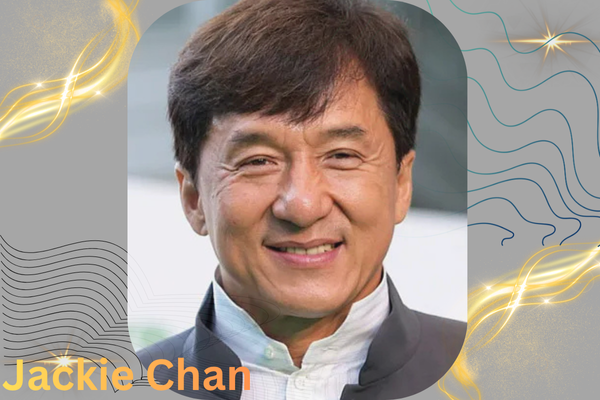
Jackie Chan was born in Hong Kong to impoverished parents. His parents relocated to Canberra, Australia, when he was six years old, but the next year they sent him back to Hong Kong to attend a rigorous boarding school that prepared pupils for the Peking Opera. Jackie Chan studied mime, singing, martial arts, and acrobatics from the ages of 7 to 17. These skills enabled him obtain tiny acting jobs as a child artist and later as a stuntman, as well as join a professional tumbling company.
Between 1976 and 1978, Jackie Chan was cast in a number of uninspired kung fu films by independent film producer Lo Wei, who was searching for a replacement for the late Bruce Lee. In his first hit films, “Snake in the Eagle’s Shadow” (1978) and “Drunken Master” (1978), Chan created his own kind of bizarre physical humor rather than copying Lee’s serious technique. Later, he created, directed, and performed in “The Fearless Hyena” (1979), showcasing his comedic timing and special gift.
For his debut picture, “The Young Master” (1980), Chan assumed complete creative control with Golden Harvest, a production business he eventually assisted in growing into the biggest film studio in Hong Kong. He started transitioning from traditional martial arts period dramas to contemporary action-adventure films like “Project A” (1983) and “Police Story” (1985), along with their sequels, in the early 1980s, despite the failure of his initial attempts to break into English-language cinema.
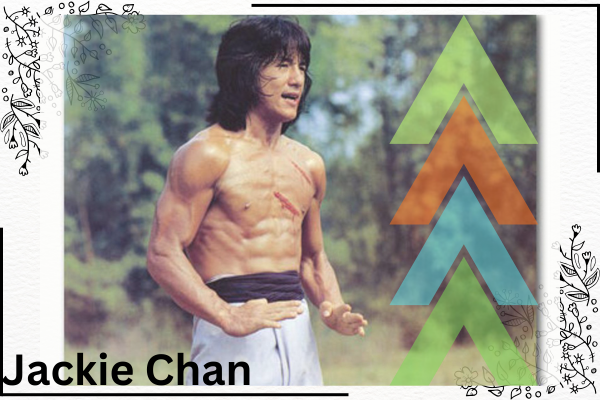
His skill in directing fight and stunt choreography was on full display in these movies. Many of his stunts were exceedingly risky; in the course of filming “Armour of God” (1986), he fell and suffered a severe fracture to his skull, which also impaired his hearing.
Chan eventually entered the American market in the 1990s. His blockbuster movie “Rumble in the Bronx” (1995) and some of his iconic Hong Kong hits were released in the United States the year after he was given a Lifetime Achievement Award by MTV in 1995. After costarring with comedian Chris Tucker in “Rush Hour” (1998), which was a huge hit and had two sequels (2001 and 2007), Chan became even more well-known worldwide.
Chan continued to work in both Hollywood and Hong Kong cinema despite some dissatisfaction with the limitations of the Hollywood industry.
He acted in well-known movies in the United States, including “Shanghai Noon” (2000), “The Tuxedo” (2002), “The Forbidden Kingdom” (2008), and “The Spy Next Door” (2010). Additionally, he starred in the revenge thriller “The Foreigner” (2017) and the remake of “The Karate Kid” (2010).
As a voice actor, Chan provided the voices for a number of popular animated films, such as “The Nut Job 2: Nutty by Nature” (2017), “Kung Fu Panda” (2008) and its sequels (2011 and 2016), and “The Lego Ninjago Movie” (2017).
“New Police Story” (2004), “Rob-B-Hood” (2006), “1911” (2011), a historical drama in which he played Chinese revolutionary Huang Xing, “The Knight of Shadows: Between Yin and Yang” (2019), and “Vanguard” (2020) are some of his Chinese-language motion pictures. Jackie Chan’s “extraordinary international career” earned him an Honorary Academy Award in 2016, making him the first Chinese actor to do so.
Chan established a prosperous career in Hong Kong’s music industry in addition to acting, producing multiple original albums since 1984. He established the Jackie Chan Charitable Foundation in 1998, which provides scholarships to young people in Hong Kong and funds a range of community initiatives.
In addition, he uses his international notoriety to support humanitarian causes as a UNICEF Goodwill Ambassador.In summary, Jackie Chan’s influence extends well beyond martial arts; he is a representation of tenacity, inventiveness, and cross-cultural understanding.