

Dash Crofts: A Soft Rock Legend Passes Away:
With timeless tracks like “Summer Breeze,” Dash Crofts—one half of the iconic duo Seals & Crofts—played a major role in shaping the smooth, melodic sound of 1970s soft rock. He passed away on Wednesday at the age of 87. Louie Shelton, the duo's producer, initially posted the information on social media. A family member said that Crofts passed away as a result of complications after heart surgery, according to TMZ sources. His longtime boyfriend, Jim Seals, passed away earlier in 2022.
Chart Success and Musical Achievements:
Even though their run of big hits lasted for roughly six years, Seals and Dash Crofts became genuine icons of soft rock. Their best hits were equally as well-known and frequently heard as chart-toppers, despite the fact that none of their songs ever peaked at number one on the Hot 100 chart. Diamond Girl (1973) and Summer Breeze (1972) both peaked at No. 6. In a similar vein, their upbeat 1976 song Get Closer, which featured Carolyn Willis, also peaked at No. 6.
Four additional of their songs—We May Never Pass This Way (Again) (1973), I’ll Play for You (1975), Goodbye Old Buddies (1977), and You’re the Love (1978)—made it into the Top 10 of the Adult Contemporary chart in addition to their three Top 10 singles.
Critical Reception and Spiritual Influence and Breakup and Later Years:
Although overtly celebrating being proven correct might not be in line with the teachings of the Bahá’í Faith, Seals and Dash Crofts eventually found lasting success despite music critic Robert Christgau’s initial dismissal of the duo as “folk-schlock.” Since the late 1960s, both members had a strong connection to this religion of peace.
After splitting up in 1980, the two briefly reconnected in the early 1990s and early 2000s. After their initial phase, these reunions only released one album, Traces (2004), which didn’t get much notice. They never really embraced nostalgia-driven tours, in contrast to many acts with a robust library of songs. Neither artist shown much desire to return to the limelight after the 1970s.
Early Career and The Champs Era:
Both were members of the band The Champs in the late 1950s and early 1960s prior to its breakthrough, albeit they joined after the group had already released its well-known hit song Tequila. Dash Crofts was the group’s percussionist, and Seals played saxophone.
Darrell, Dash Crofts, the more gregarious of the two and two years older than Seals, was raised in Texas as the son of a ranch owner. In the middle of the 1950s, he initially asked Seals to join a band named The Crew Cats. In 1958, they were both given the opportunity to join The Champs, whose song “Tequila” had recently peaked at number one. They stayed with the group until 1965.
Move to Los Angeles and Musical Evolution:
After moving to Los Angeles, they joined The Dawnbreakers. For a while, they also shared the stage with Glen Campbell, just before he rose to fame. Their manager, Marcia Day, practiced the Bahá’í Faith, and their shared Sunset Boulevard house became a gathering place for Bahá’í followers and musicians. Five years before their breakout success, in 1967, both Seals and Dash Crofts formally converted to the Bahá’í Faith.
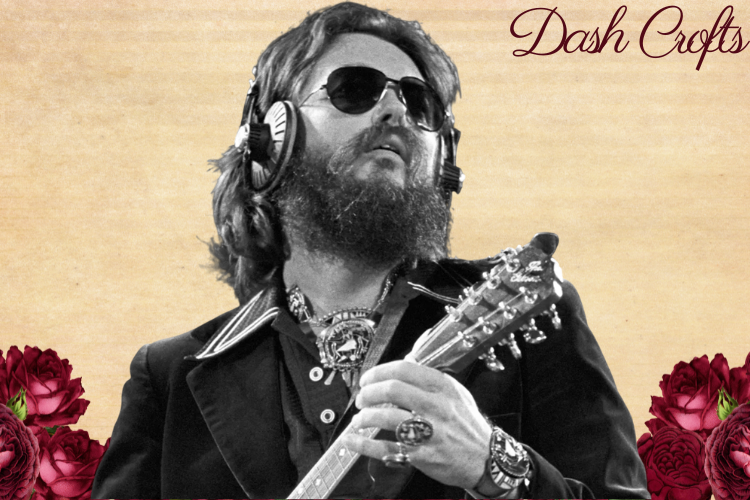
They abandoned their earlier instrumentation in favor of a folk-rock style. Seals took up the guitar, while Crofts, who first adored jazz and later rock ‘n’ roll, learnt to play the mandolin. Interestingly, Dash Crofts used to be a vocalist and percussionist. He noted in a 2022 podcast that he switched instruments when they chose to work with a big label like Warner Bros. The mandolin was his choice since it went so nicely with the guitar.
Creative Process and Musical Identity:
Dash Crofts discussed how their music was becoming softer and more difficult to describe in a 1971 interview with Stereo Review. Despite what some had referred to as sacred music, he emphasized that while it was influenced by spirituality, it was not entirely religious. He emphasized that their sound was uniquely theirs, molded more by personal growth than by any particular musical influence.
Speaking about their creative process, Dash Crofts disclosed that following intense hard rock shows, they would perform softer, more melodic tunes at home. Even though they were comfortable in the rough rock environment, they eventually found it physically exhausting. Playing soothing music was a pleasant change of pace.

Spiritual Beliefs and Their Impact on Music and Breakthrough with “Summer Breeze”:
Dash Crofts stated that the Bahá’í Faith encourages unity across all racial groups, philosophies, and ideas in a 1971 discussion of spiritual impact. As they embraced these principles, their music evolved along with their perspective on life. From simple vows of love to deeper reflections on life, harmony, and interpersonal relationships, their music changed throughout time. They believed that utilizing music to express something genuine was very important.
Despite having beautiful music, their first three albums together, which were issued between 1969 and 1971, were mainly disregarded. They had attempted with Summer Breeze before, but it wasn’t until their third album, titled after the song, came out in 1972 that they found the ideal version. The song gained increasing popularity on radio stations over time. Seals remembers witnessing their unanticipated rise upon arriving in Ohio for a performance, according to Texas Monthly. They were greeted by thousands of supporters at the airport, and that night, roughly 40,000 people came together to create a spectacular show in the moonlight.
Fame, Performances, and Controversy:
According to Texas Monthly, the couple remained grounded despite being well-known for songs like Diamond Girl, owning a private jet, and performing at significant events like California Jam with bands like Deep Purple and The Eagles.
They would frequently converse with fans about the Bahá’í Faith while seated at the edge of the stage.
In 1974, they sparked controversy after the Roe v. Wade decision by releasing the anti-abortion song Unborn Child, despite opposition from their label, Warner Bros..
They contributed to the soundtrack of Robbie Benson’s 1977 movie One on One. They were heavily credited as performers even though Paul Williams and Charles Fox wrote the songs.
Life After the Split:
Their style had become out of step with the disco-heavy Top 40 radio scene by the time they broke up in 1980. Later, Seals and his wife Ruby relocated to Costa Rica, where he reportedly raised their three kids and operated a coffee farm. Before relocating to Australia, Crofts and his family first resided in Mexico.
Their first collaborative album since 1980, Traces, was released after their brief reunion in 1989–1992 and again in 2004.
Family Legacy and Musical Continuation:
Their relatives carried on the musical tradition. Their daughters, Juliet Seals Crosley and Amelia Crofts Dailey, established The Humming Birds in 2010. Later, in 2018, Brady Seals, the cousin of Jim Seals, and Lua Crofts, the daughter of Dash Crofts, formed a team known as Seals & Crofts 2. The details of the funeral have not yet been disclosed.